



Надвисокий ЛІХТАР
Background
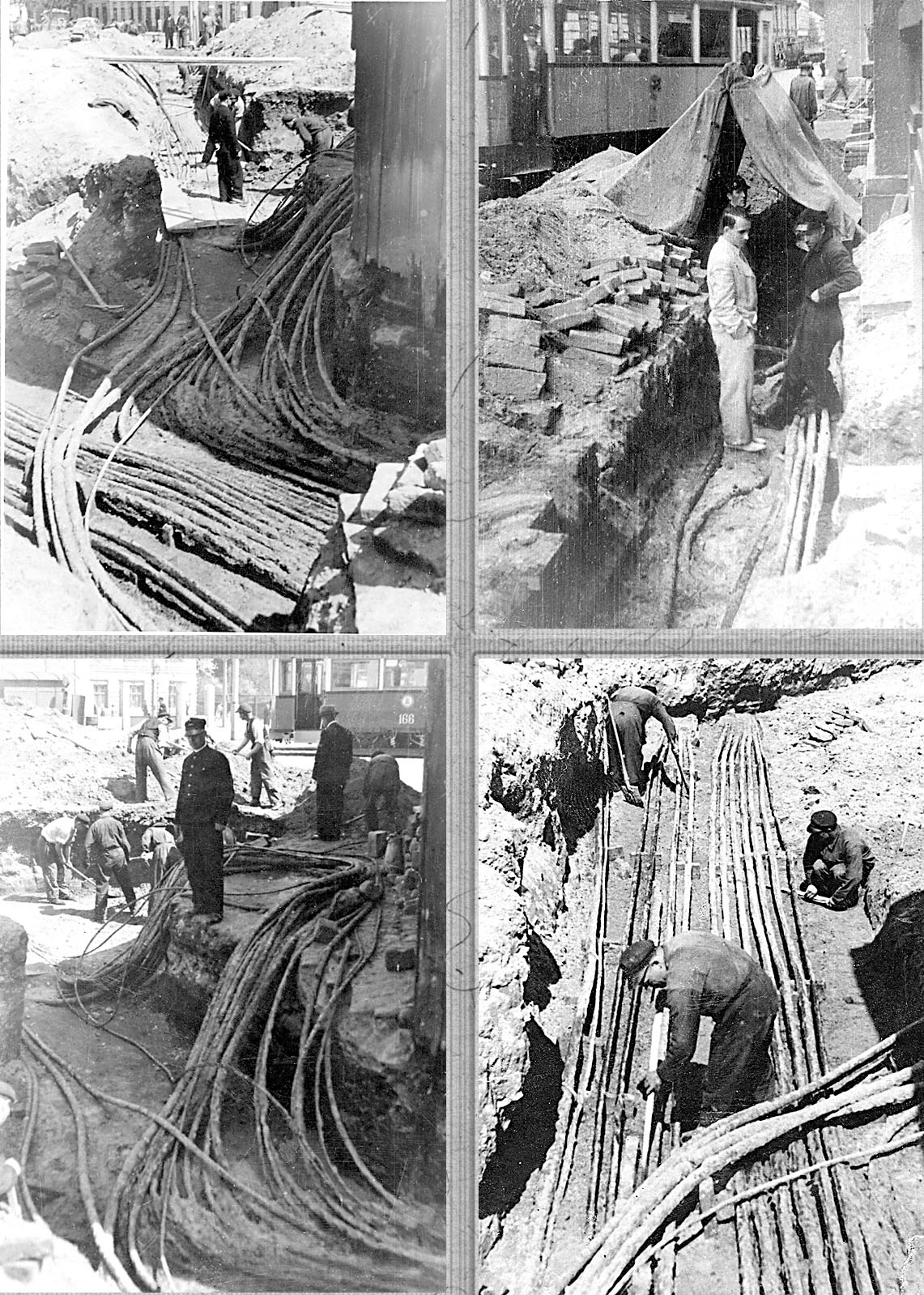
Let's travel back to 1908. The city is undergoing active electrification: the electric tram network is expanding, a new power plant is being built on Kozelnytska Street (the present-day TEC-1), and the Zygmunt Rodakowski firm, in collaboration with the Viennese company Siemens-Schuckert, is completing the laying of new power grids along the city streets.
Let's travel back to 1908. The city is undergoing active electrification: the electric tram network is expanding, a new power plant is being built on Kozelnytska Street (the present-day TEC-1), and the Zygmunt Rodakowski firm, in collaboration with the Viennese company Siemens-Schuckert, is completing the laying of new power grids along the city streets.
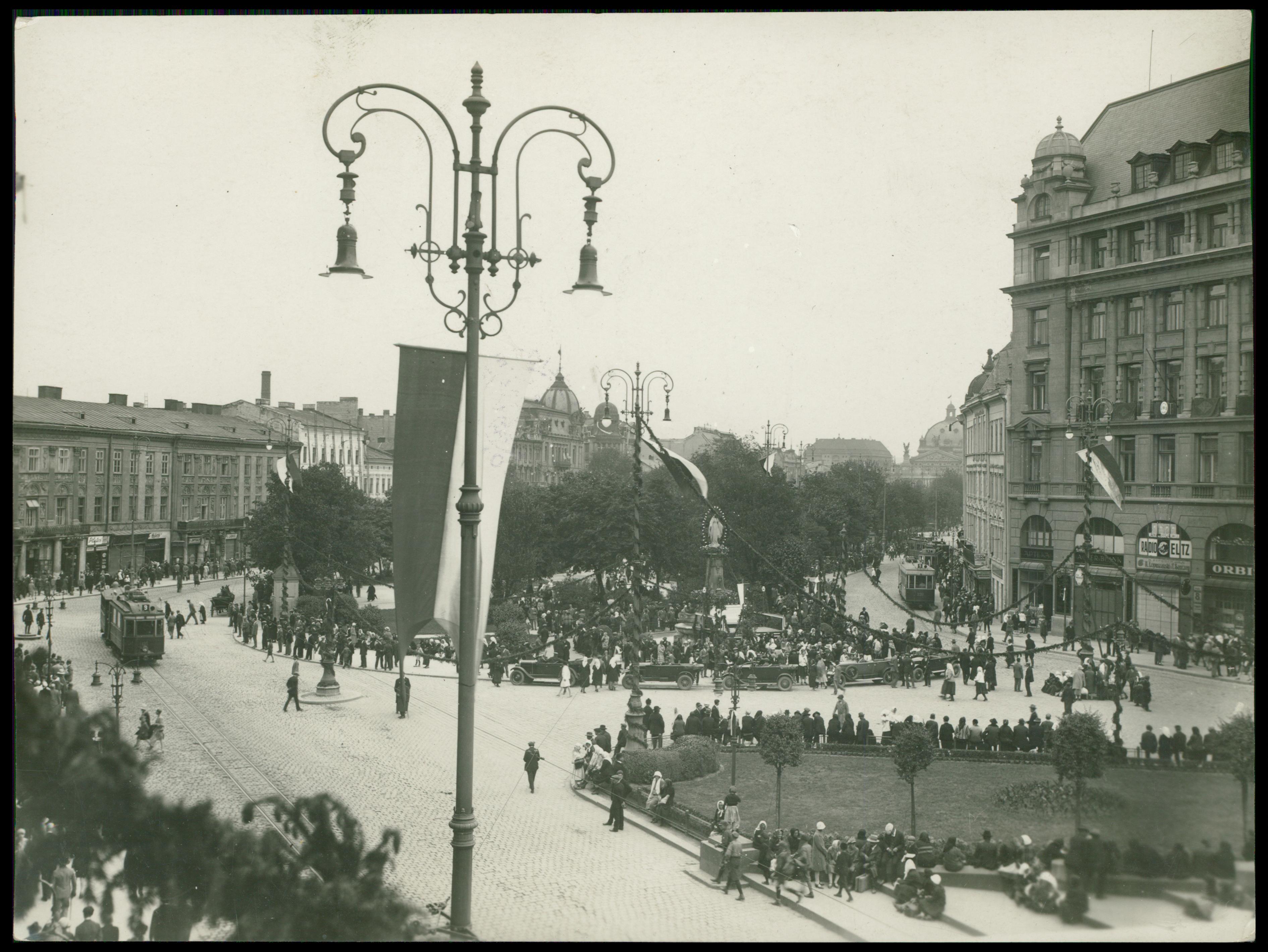
As these processes converge, full-fledged electric street lighting emerges in Lviv.
"The new street lighting lends our city a metropolitan air and accentuates its architectural heritage..."
- Lviv City Magistrate, 1912.
Design

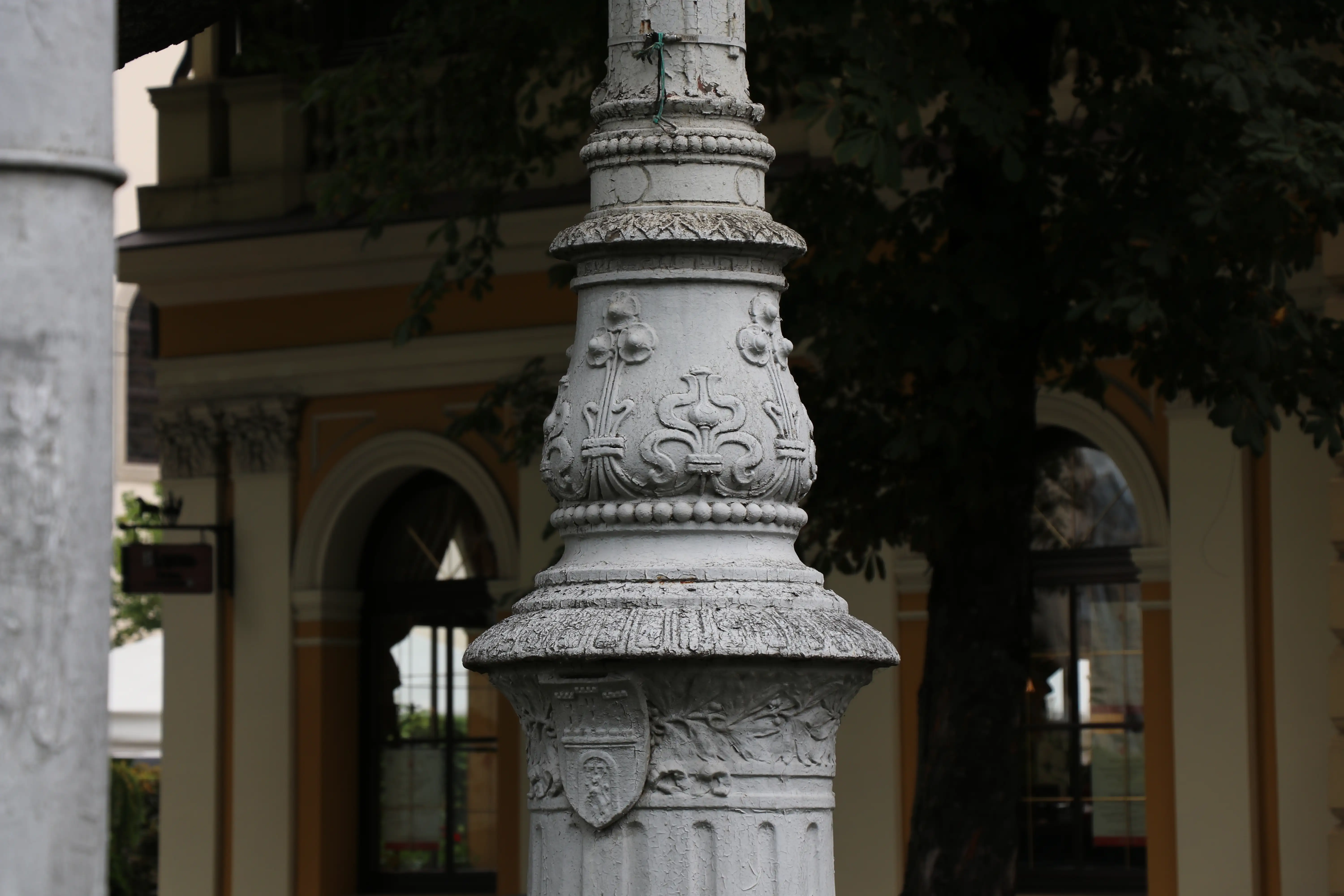
The Secession-style pedestal is adorned with a decorative cartouche featuring the city's coat of arms from that period, alongside floral ornamentation depicting lily of the valley flowers and leaves.
Structurally, the pedestal is a hollow decorative casing over the cylindrical base of the lamp, which allowed the cable connection point and the lamp-lowering mechanism to be concealed behind a maintenance hatch.
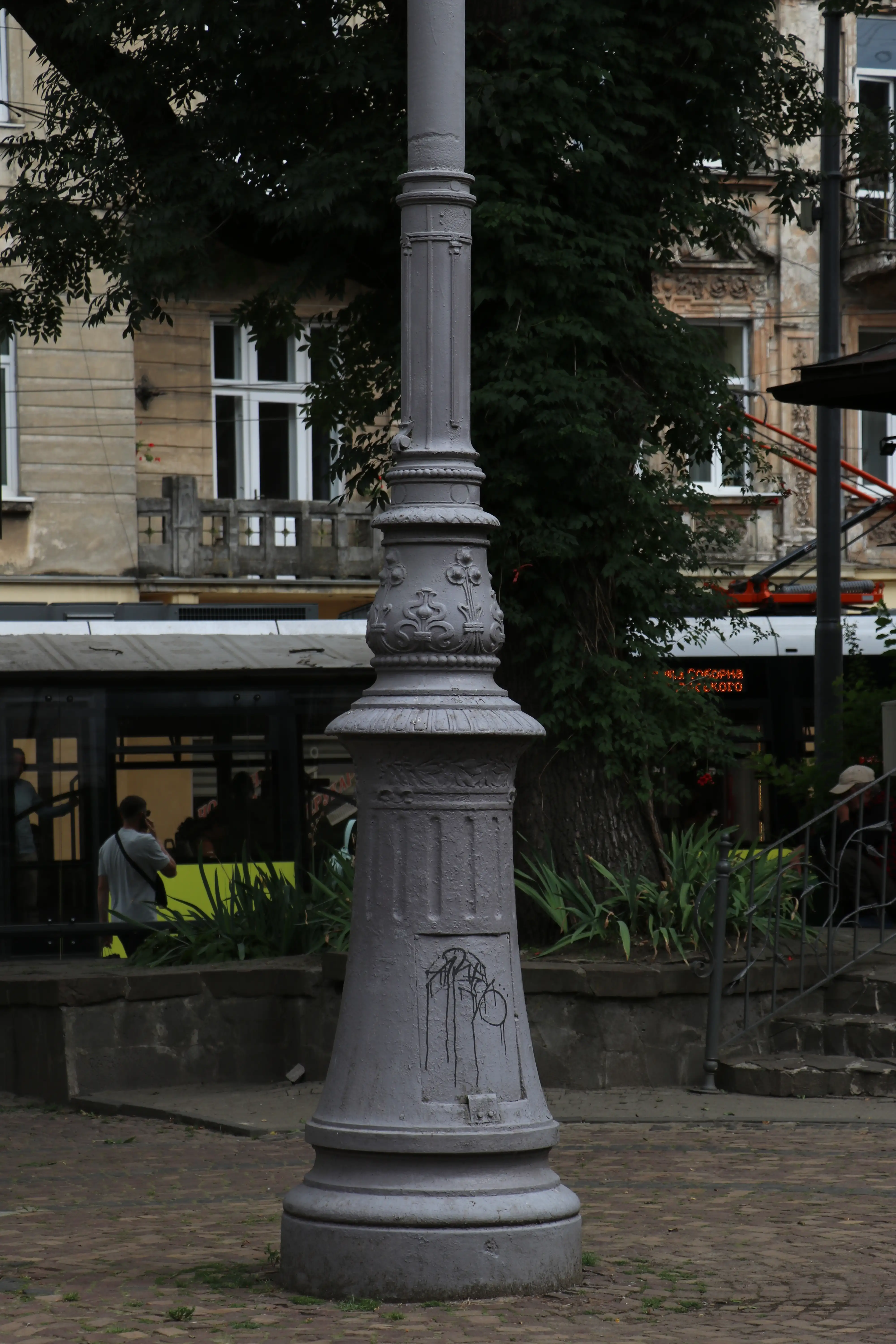
The slender cast-iron mast, manufactured using centrifugal casting, features two weld seams concealed by decorative bands. Despite its narrow diameter, the mast was also used to anchor the tram's overhead wire network.
The slender cast-iron mast, manufactured using centrifugal casting, features two weld seams concealed by decorative bands. Despite its narrow diameter, the mast was also used to anchor the tram's overhead wire network.
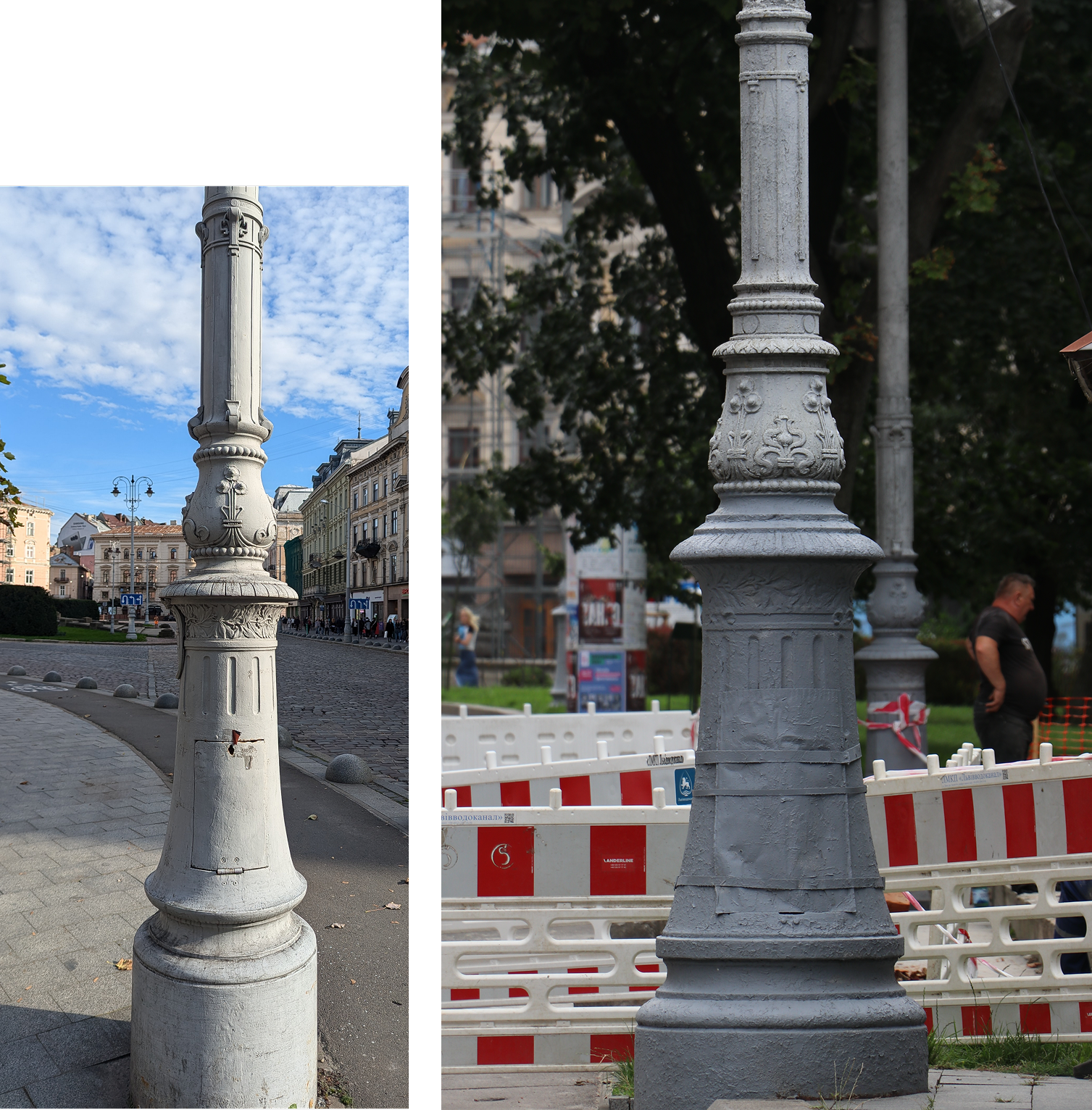
The proportions of the pedestal depended on the number of lamp arms: a smaller pedestal was used for single-arm streetlights, while a larger one was used for double-arm versions.
The proportions of the pedestal depended on the number of lamp arms: a smaller pedestal was used for single-arm streetlights, while a larger one was used for double-arm versions.
The Arc Lamp
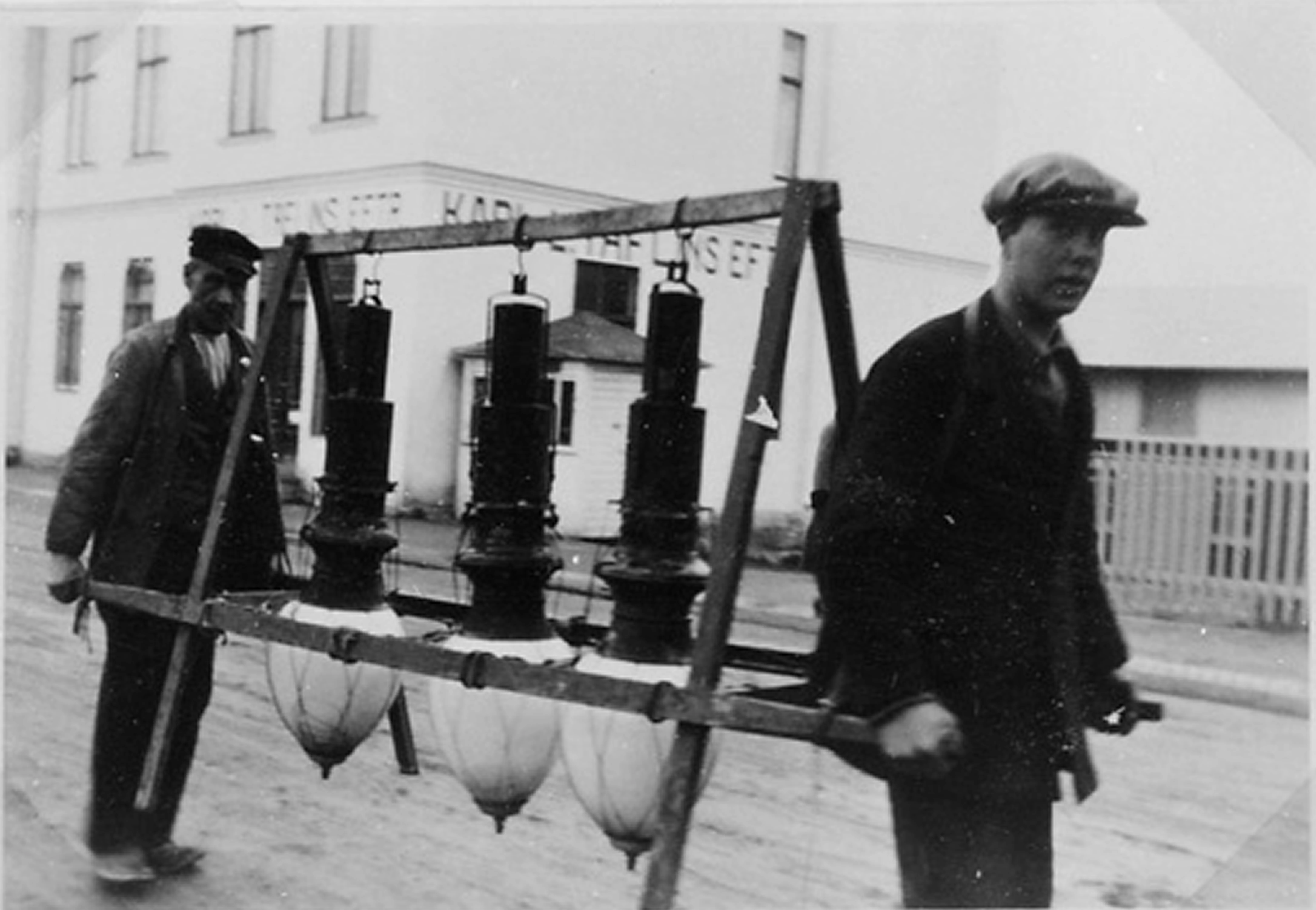
The originally installed arc lamps utilized an automatic regulation technology invented by František Křižík. This extended the lamps' operating time to an impressive three days — a remarkable achievement for that era.
Frequent maintenance of streetlights at such a height (14 meters) could have posed a significant challenge. Therefore, the design of each lamp incorporated a mechanism to lower the fixture down to human height, making maintenance considerably easier.
Джерело: JLM 87X345 1 – Energiförsörjning//Stiftelsen Jamtlis Samlingar
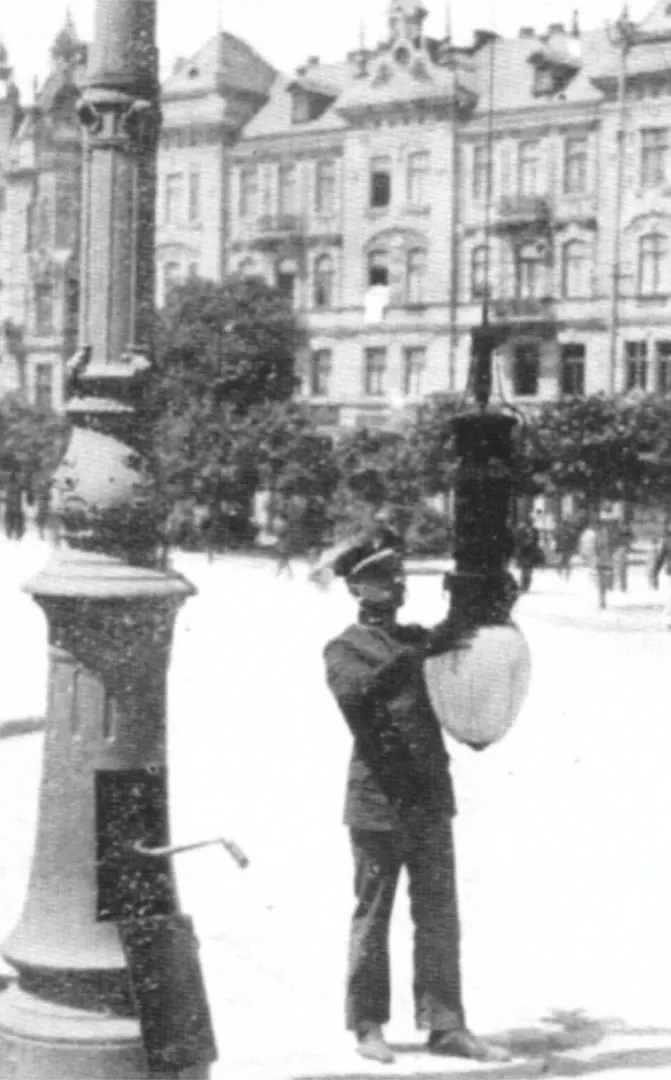
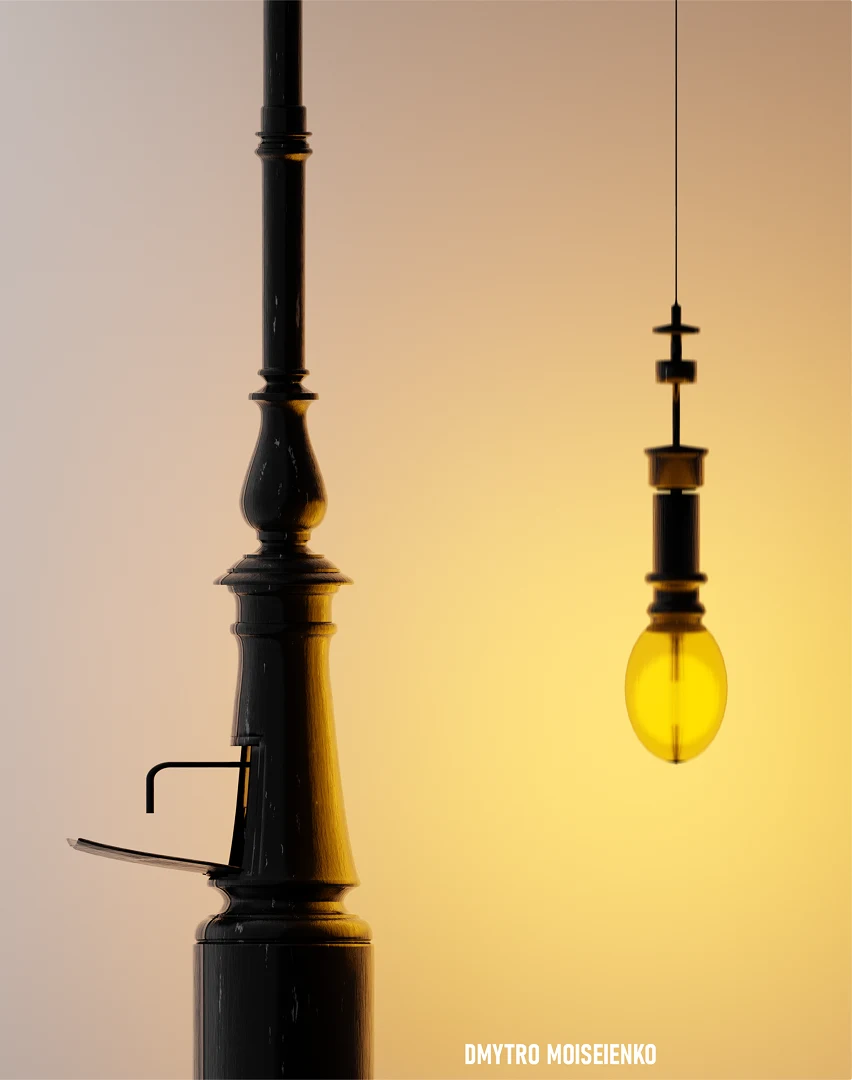
The mechanism consisted of a winch, located behind the maintenance hatch, and a cable. The winch was operated with a special key, while the cable ran inside the mast, attaching to the fixture through an opening at the level of the lamp arms. Turning the key would lower or raise the lamp.


Ultra tall lantern or Bischofsstab?
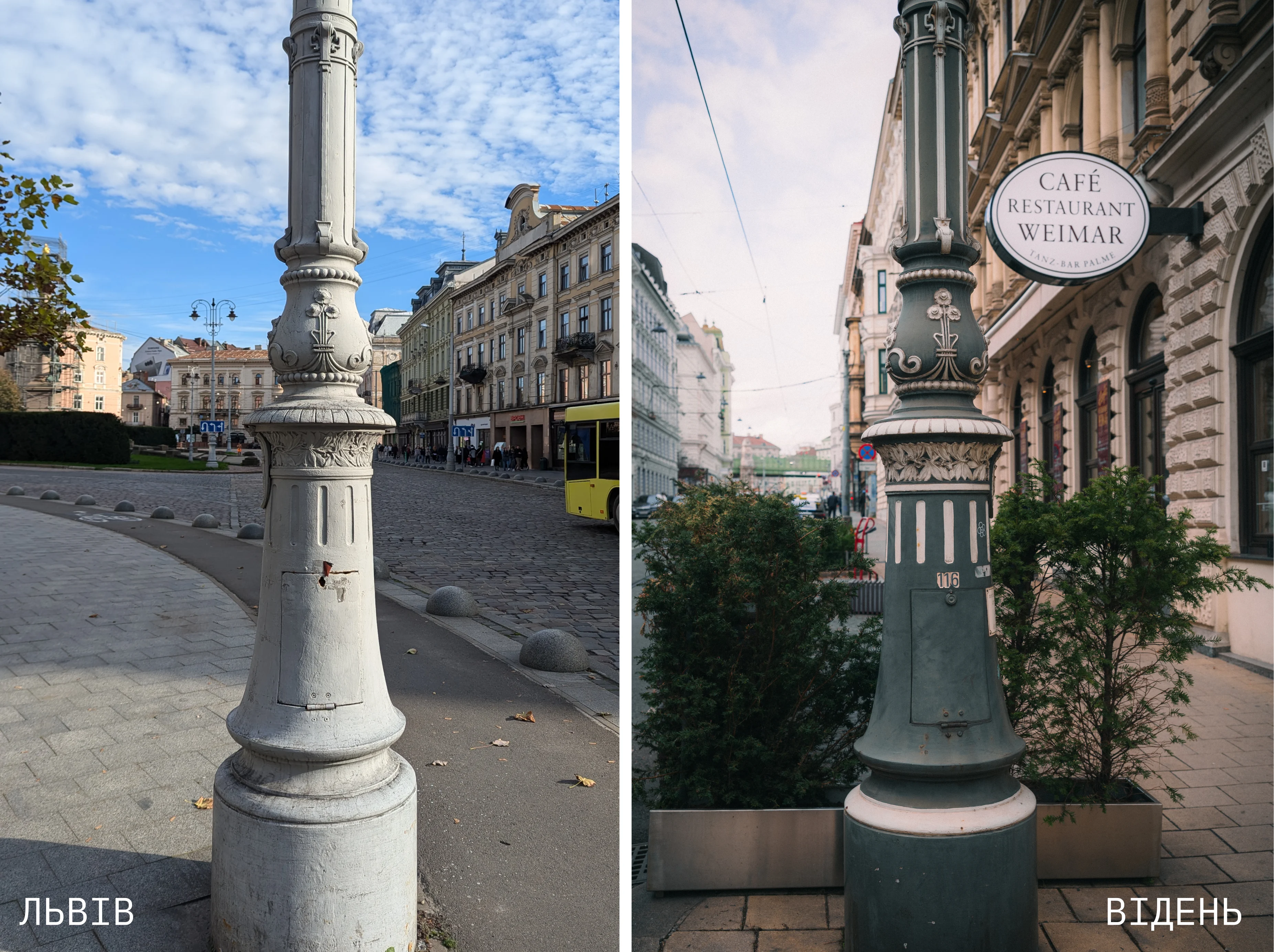
In Lviv, unlike in Vienna, there was no tradition of two-tone painting for streetlights. They typically had a single-color finish, most likely a dark shade, although the exact color remains a subject of debate.
In Vienna, the lamps were historically painted dark gray combined with white (ivory). This lighter color was used to highlight the decorative elements and ornamentation, providing additional visual emphasis.
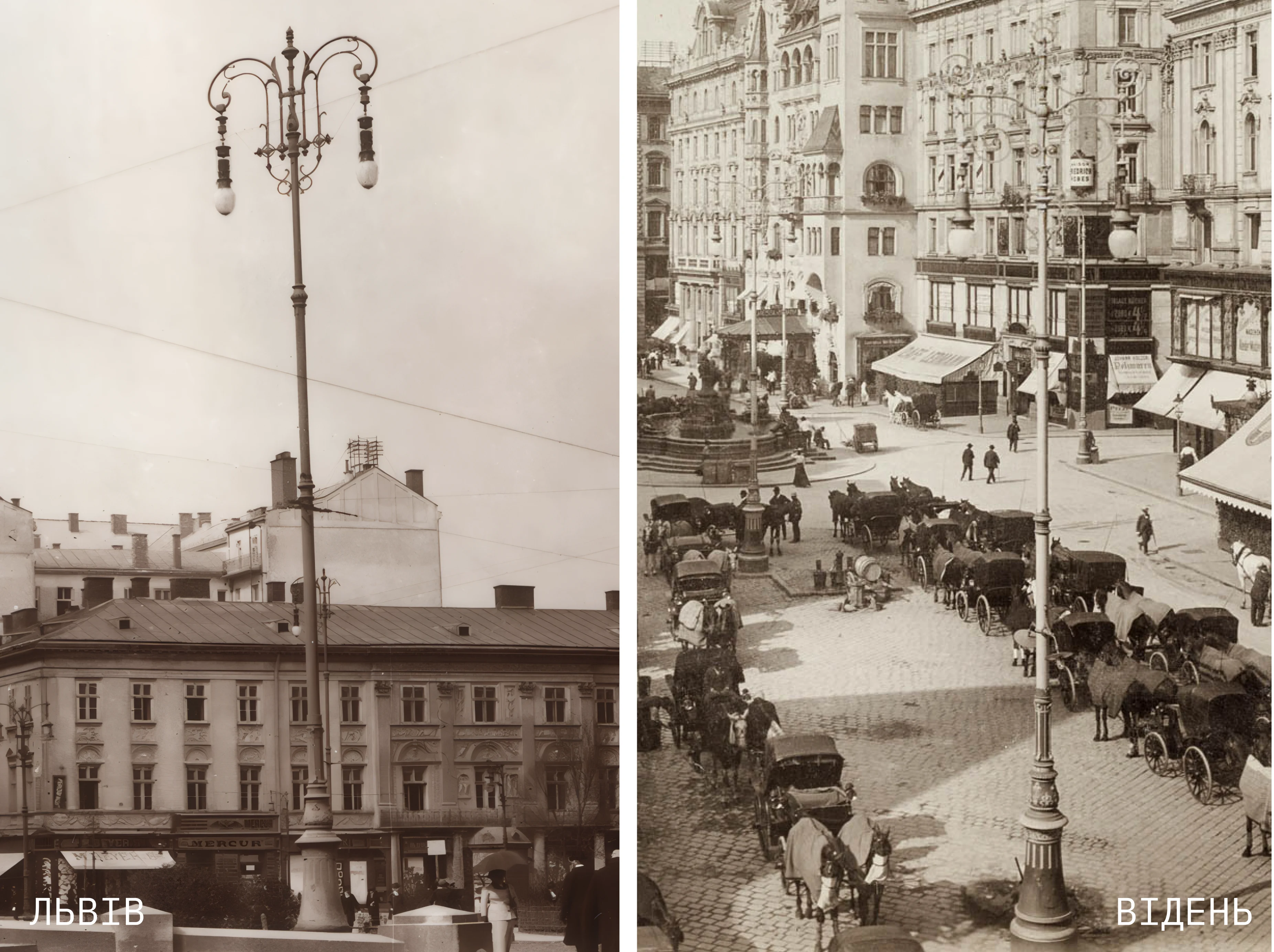
According to the Vienna Technical Museum, these streetlights were likely manufactured at the Rudolph Philipp Waagner factory.
The design of the streetlights in Vienna differed from those in Lviv, particularly regarding the lamp arms and fixtures, but otherwise, they were identical.
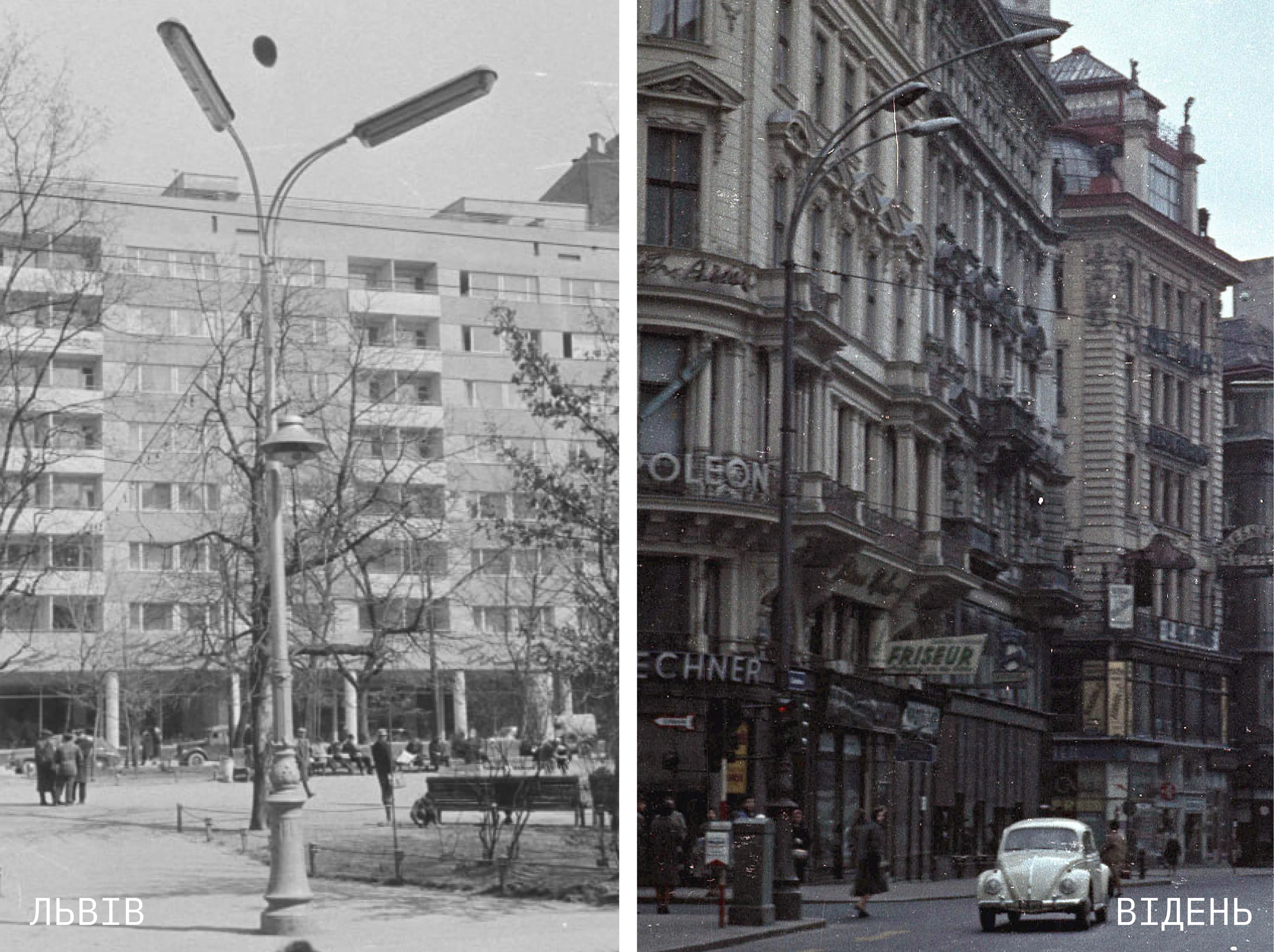
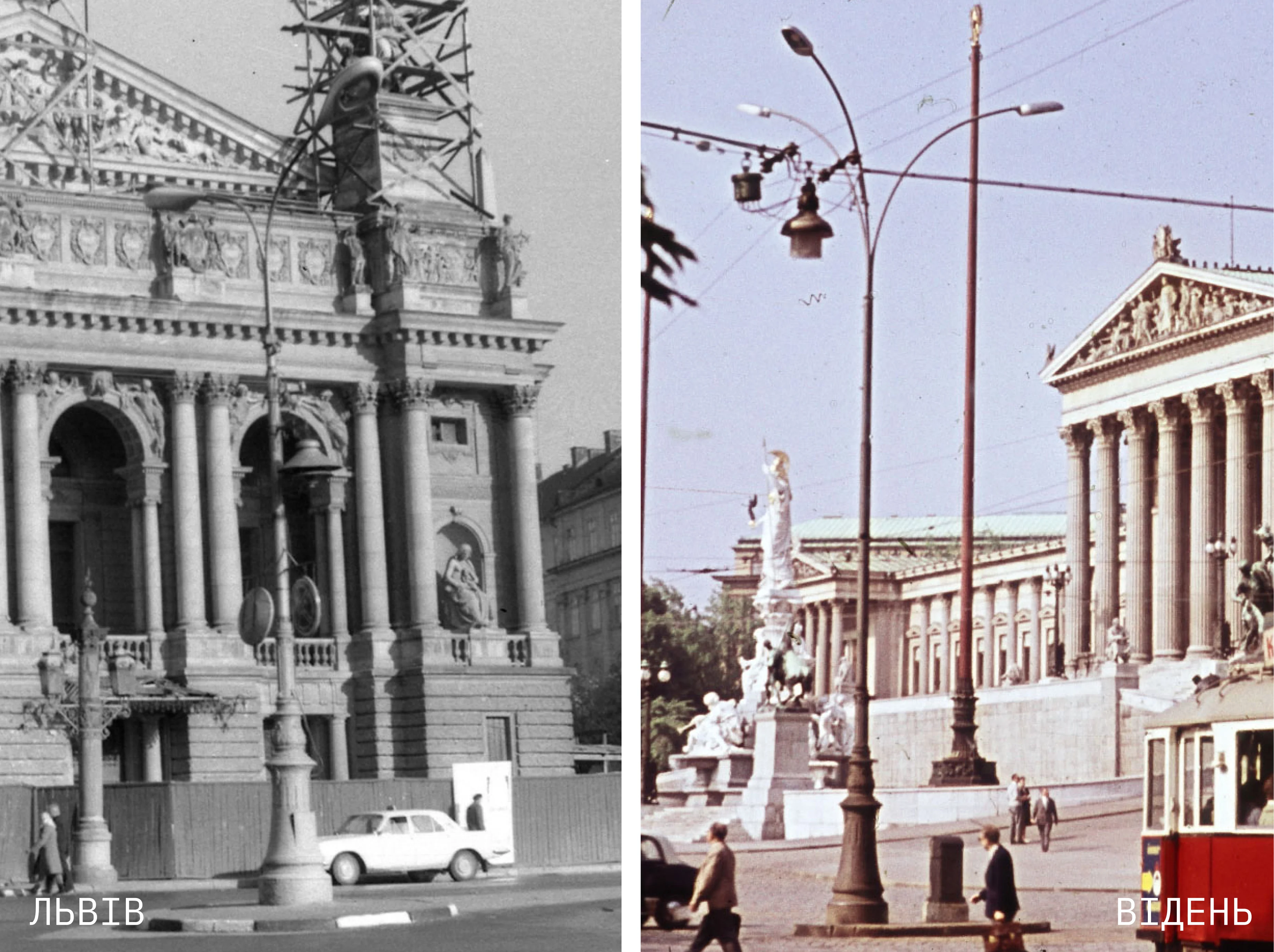
The evolution of lighting technology directly influenced the physical appearance of the streetlamps.
Over time, in both Lviv and Vienna, the lamps were modernized: their upper sections were dismantled and replaced with more contemporary counterparts.
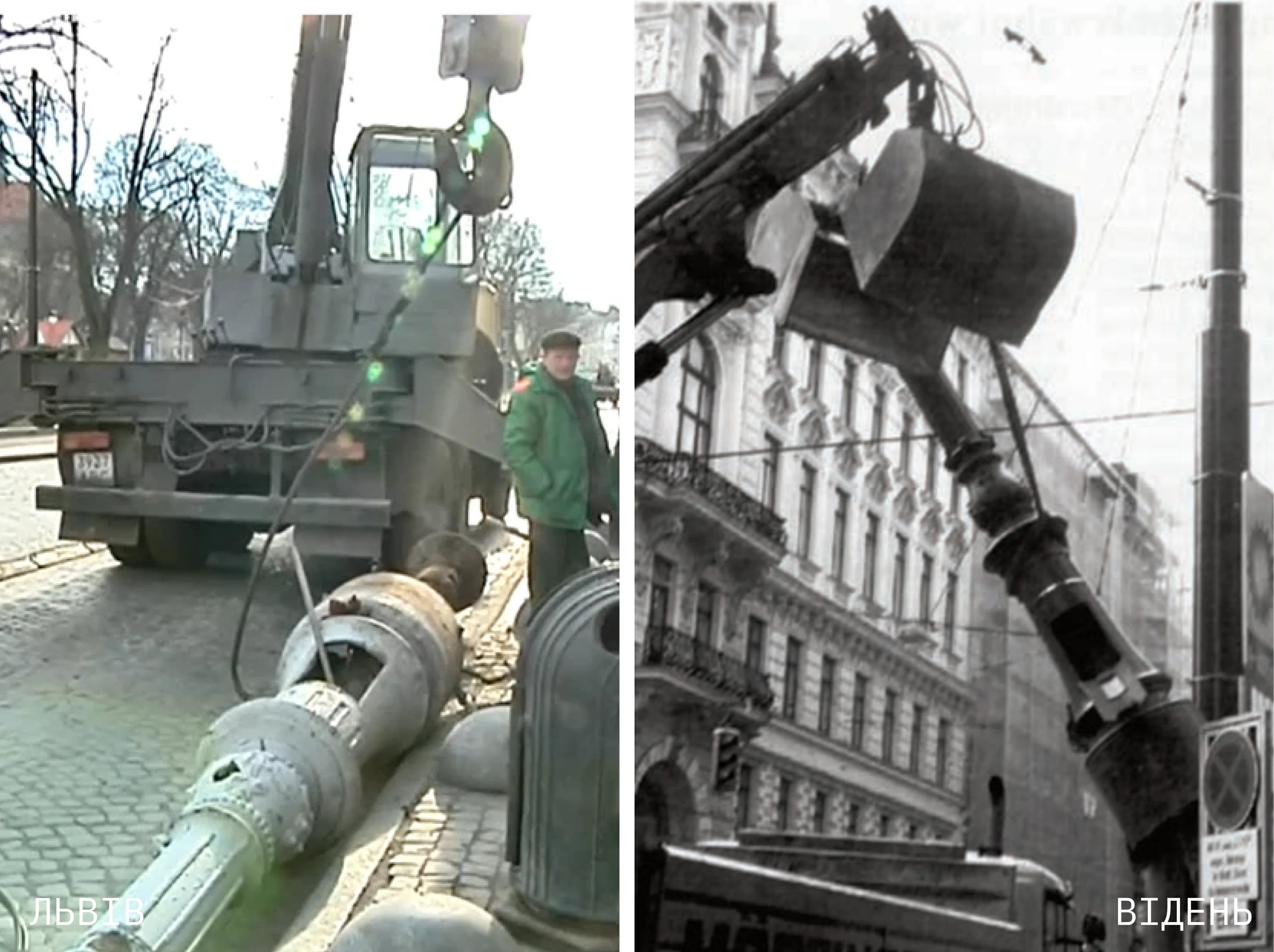
At the end of the 20th century, the old streetlights were massively replaced by modern cylindrical poles. However, in the historical parts of the cities—on main streets and squares—efforts were made to preserve them.
Today, in Lviv, they can be seen on Svobody Avenue, while in Vienna, they can be found on the Am Hof and Stephansplatz squares.
"Along Akademichna [Shevchenko Avenue] and Karol Ludwig [Svobody Avenue], the attentive Magistrate installed large arc lamps that illuminated the roads and sidewalks 'al giorno' [like daylight]..."
- from the book "Rada Miejska we Lwowie"
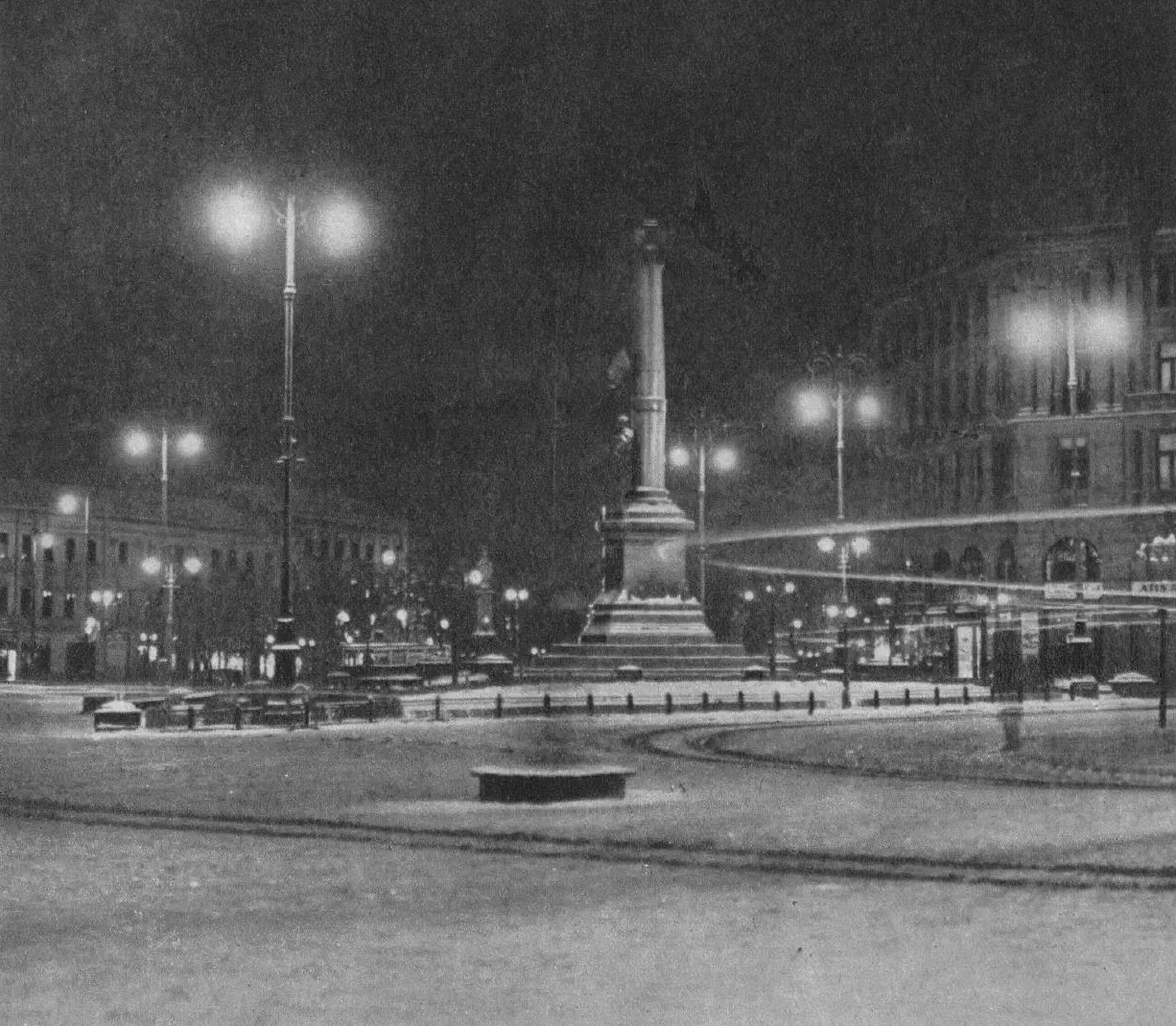
Evolution
After 1909, the number of electric light sources and streetlights in Lviv began to grow rapidly. This was driven by both the increasing capacity of the local power plant and overall advancements in lighting technology. The arc lamps were soon replaced by the now-familiar incandescent bulbs.
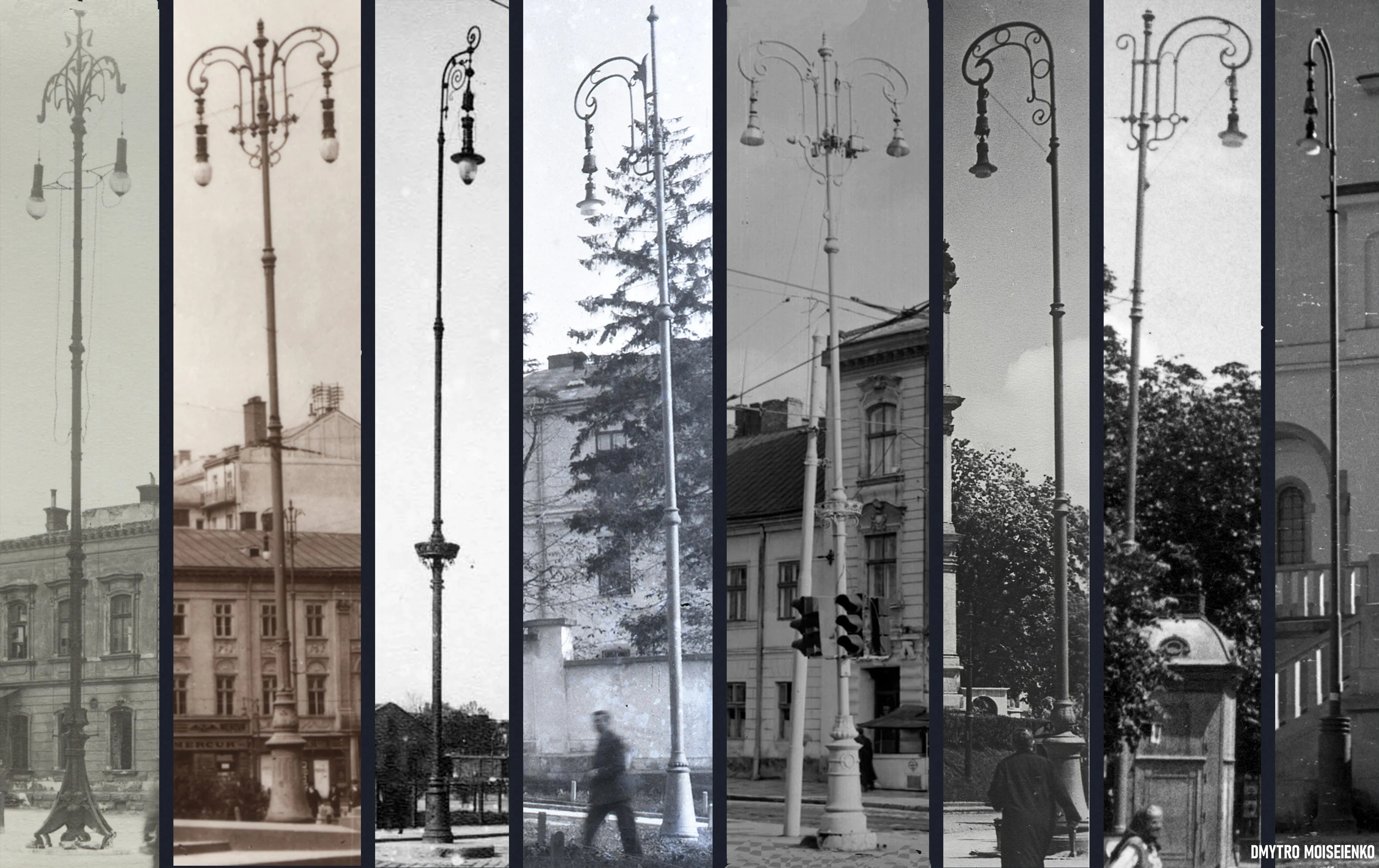
At the same time, trends in architecture and design shifted towards standardization, emphasizing functionality over excessive decoration. The streetlights saw a reduction in decorative elements, and the visual boundary between the structural mast and the decorative base began to blur.
At the same time, trends in architecture and design shifted towards standardization, emphasizing functionality over excessive decoration. The streetlights saw a reduction in decorative elements, and the visual boundary between the structural mast and the decorative base began to blur.
Джерело: Nussbaum Dawid //domena publiczna
Between 1908 and 1939, at least eight types of ultra-high streetlamps appeared on the streets of Lviv. All of them built upon the structural concepts of the first ultra-high lamp, differing primarily in their ornamentation.
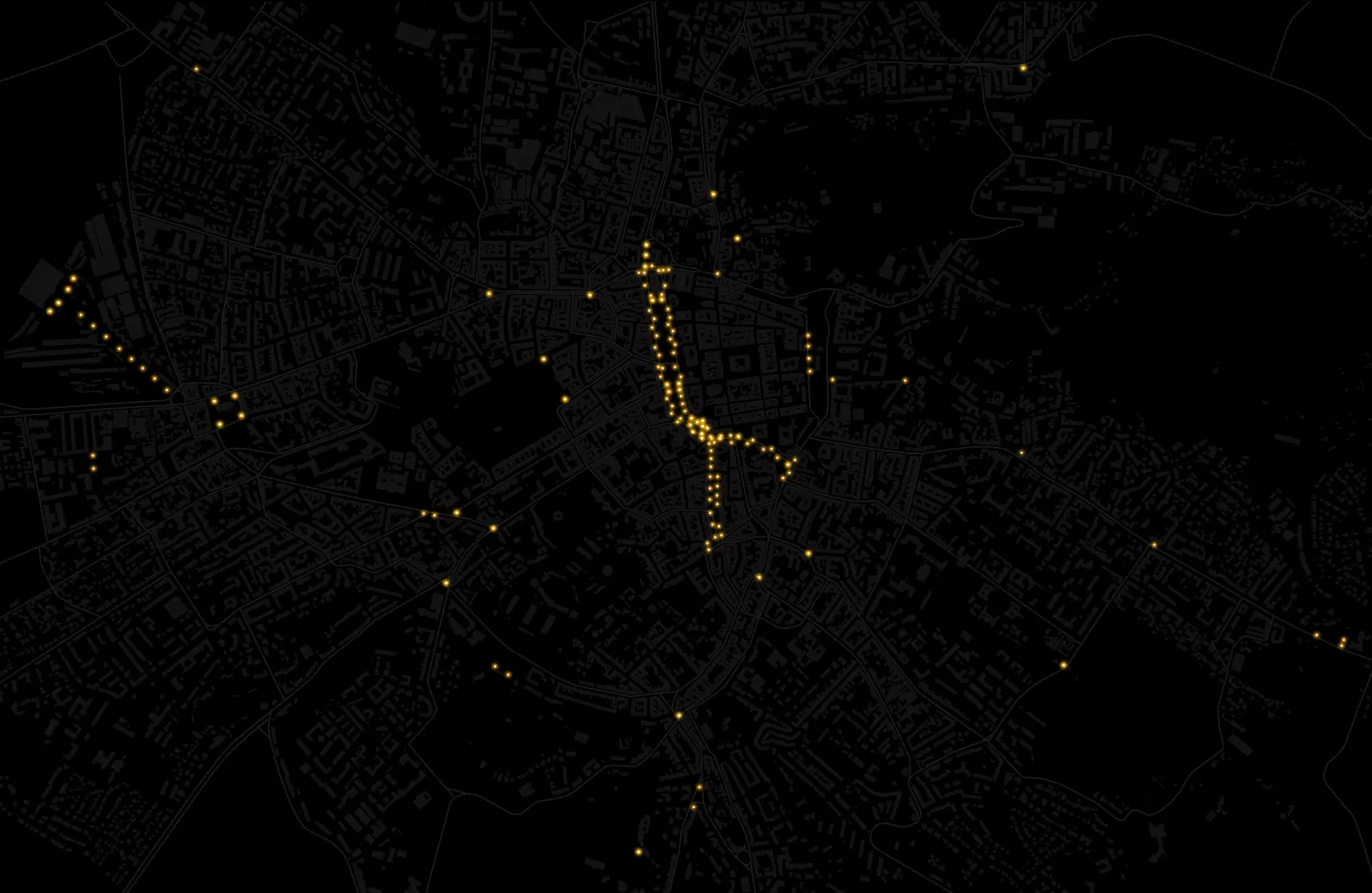
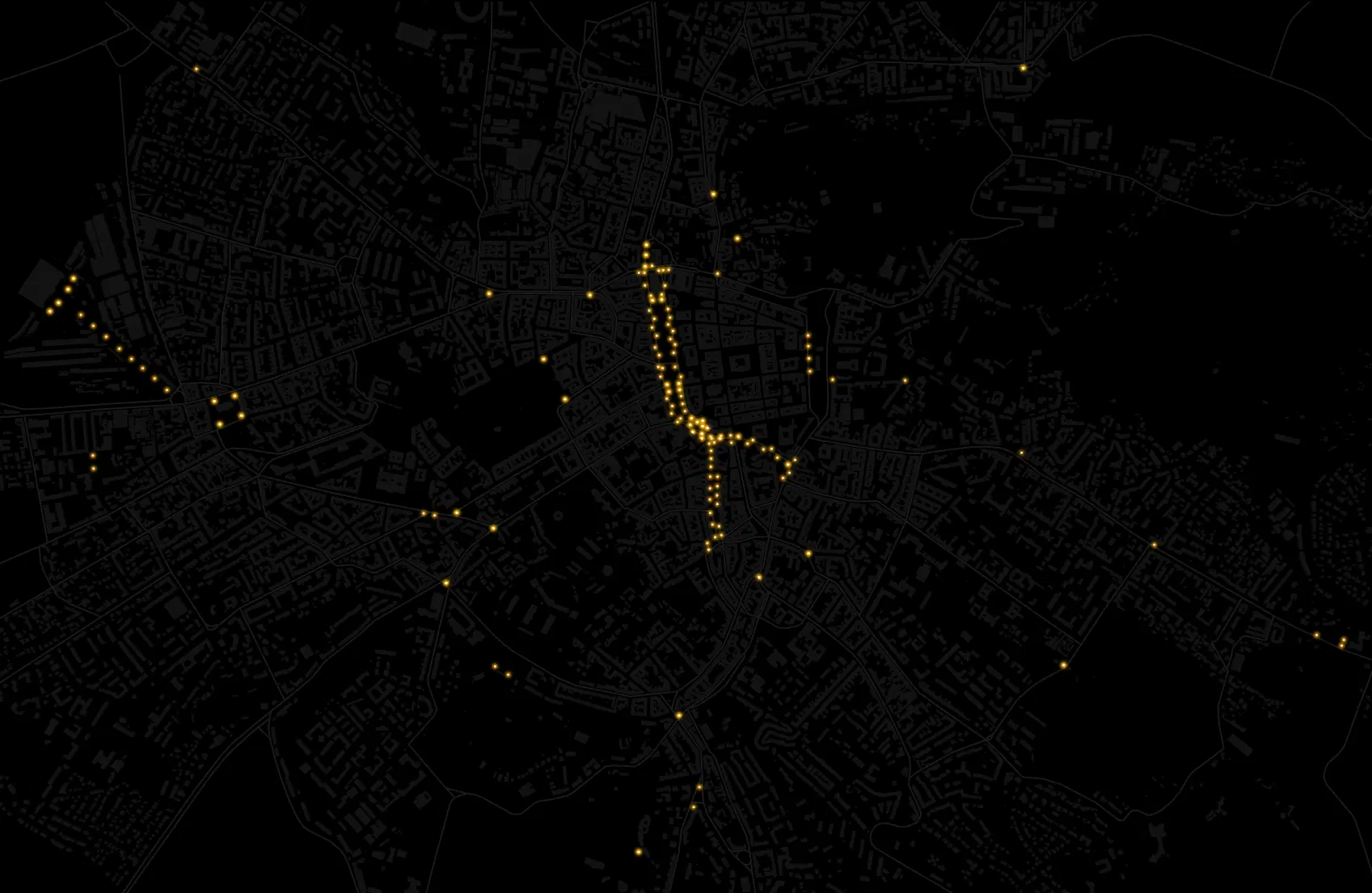
An analysis of historical photographs has identified the installation sites of at least 141 ultra-high streetlamps.
The Soviet Era
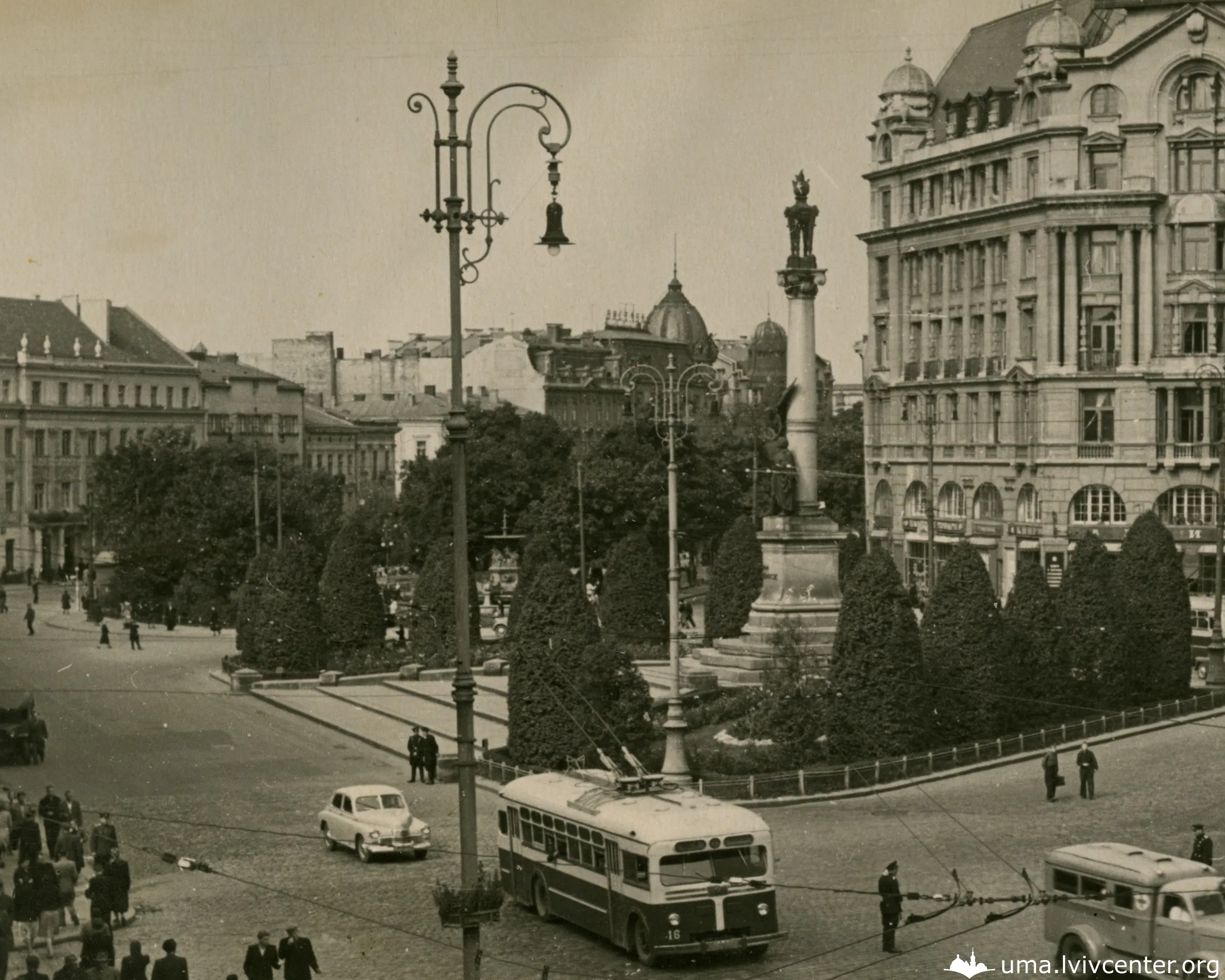
The first ultra-high streetlamps, as previously mentioned, emerged largely thanks to the expansion of the electric tram network. Quite symbolically, it was the development of the trolleybus network on Svobody Avenue in 1954 that led to the dismantling of most of them.
Завершення прокладання тролейбусної мережі на площі Міцкевича. Джерело: Колекція Володимира Румянцева // Міський медіаархів Центру міської історії
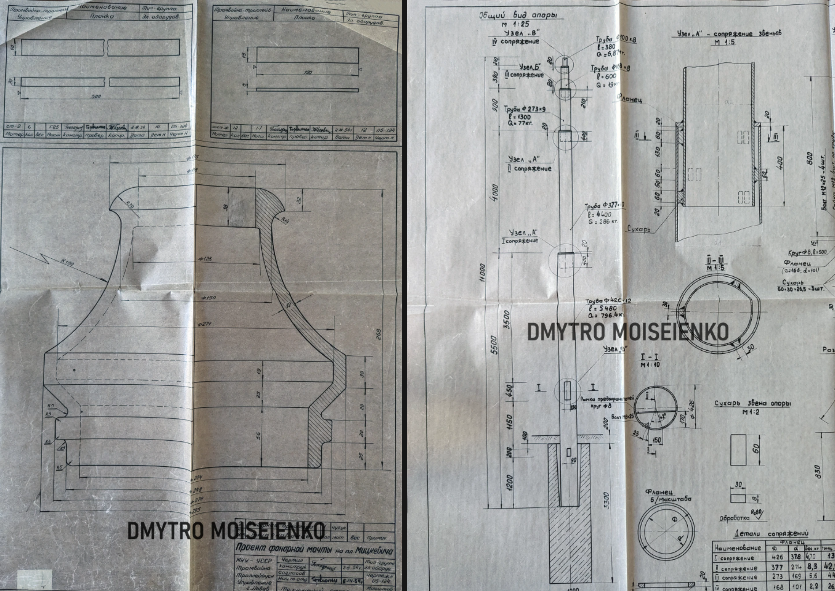
At that time, the old masts were replaced, while the lamp arms and decorative overlays were recreated in a pseudo-historical style. These copies differed both proportionally and visually from the original lamps. The only remaining elements of the authentic streetlights were the pedestals, which were repurposed in the new structures.
At that time, the old masts were replaced, while the lamp arms and decorative overlays were recreated in a pseudo-historical style. These copies differed both proportionally and visually from the original lamps. The only remaining elements of the authentic streetlights were the pedestals, which were repurposed in the new structures.
Креслення фасадів опор. Джерело: ЛКП "Львівелектротранс"
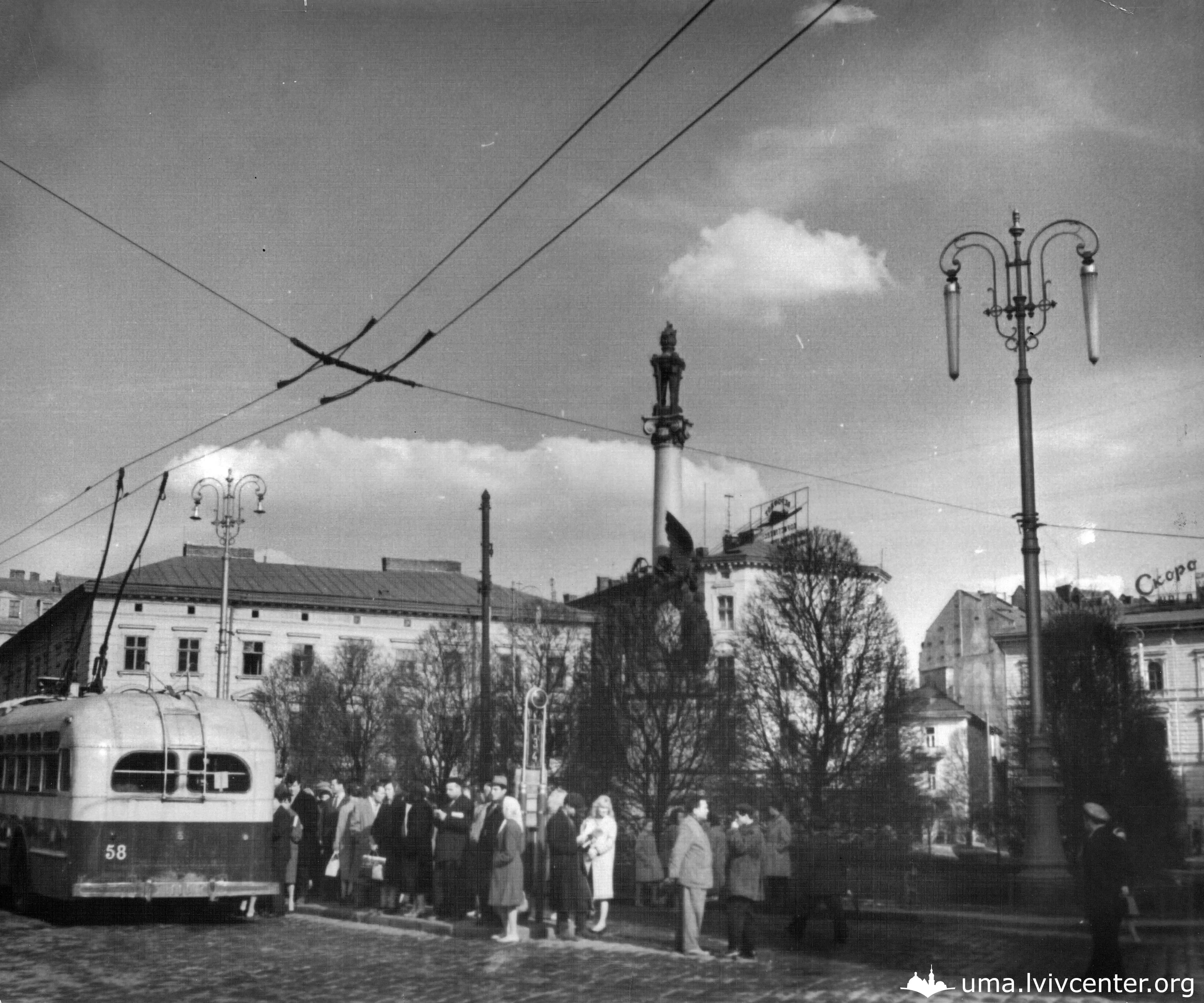
Between approximately 1962 and 1965, unique "icicle"-shaped frosted glass lampshades could be seen on Mickiewicz Square and Svobody Avenue. Whether this design was dictated by the use of tubular bulbs remains undetermined today.
Джерело: Колекція Володимира Румянцева // Міський медіаархів Центру міської історії
A Second Life
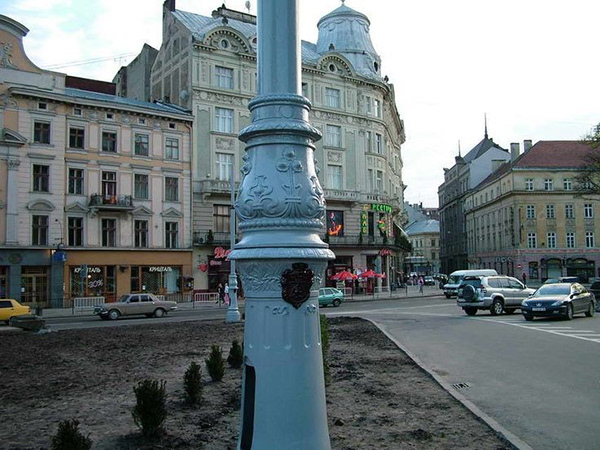
In 2011 on Mickiewicz Square, and in 2015 on Svobody Avenue (from Hnatiuk to Kopernyk Street), the ultra-high streetlamps underwent reconstruction. Just as in 1954, the surviving historical pedestals were utilized, while the masts and upper sections were newly manufactured in an attempt to replicate the original proportions.
Встановлення ліхтарів на площі Міцкевича. 2011 рік. Джерело: RDZS
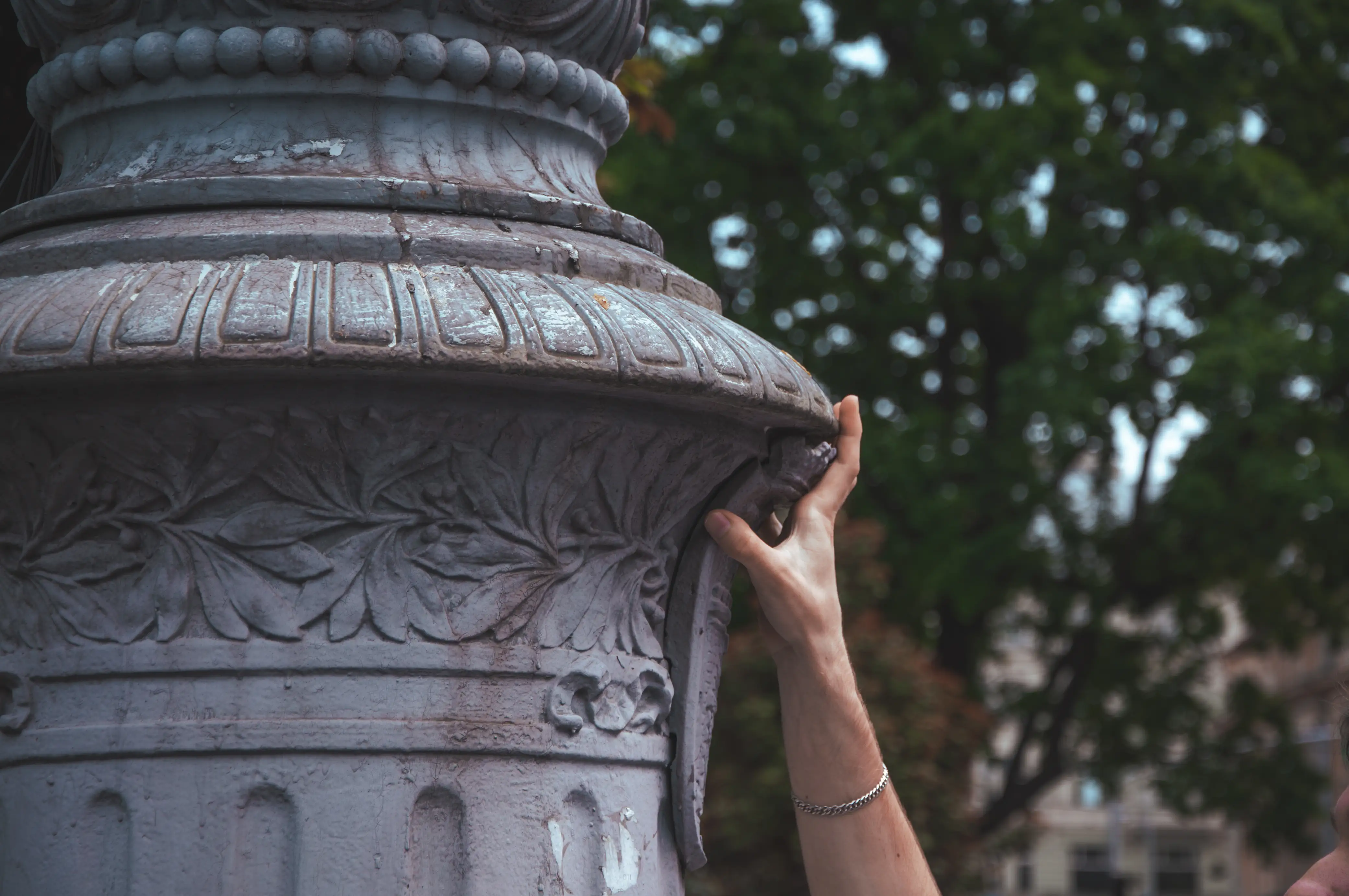
The work was carried out by the Lviv-based firm "Oberih-Group," commissioned by the Department of Historic Environment Preservation. This reconstruction successfully restored the missing maintenance hatch doors and the cartouches bearing Lviv's coat of arms, located beneath the pedestal bowl. The pedestals themselves were restored to a highly commendable standard.
However, when recreating the lost components (masts, lamp arms, and luminaires), the restorers relied on the 1954 Soviet designs. Consequently, the streetlamps were not returned to their authentic, original appearance, but rather to the altered form they had acquired during the Soviet period.
However, when recreating the lost components (masts, lamp arms, and luminaires), the restorers relied on the 1954 Soviet designs. Consequently, the streetlamps were not returned to their authentic, original appearance, but rather to the altered form they had acquired during the Soviet period.
Відновлений картуш з гербом міста на одному з п'єдесталів. Джерело: Владислав Муравський
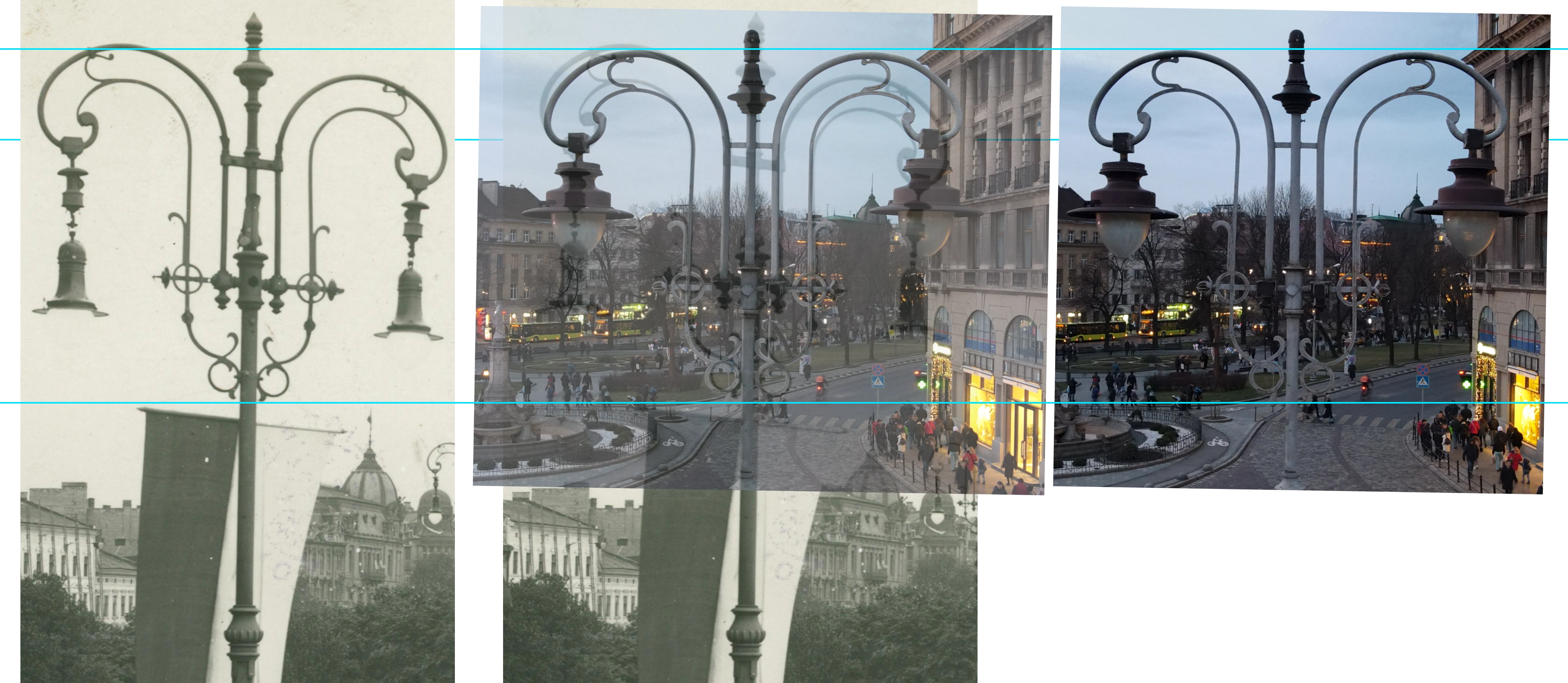
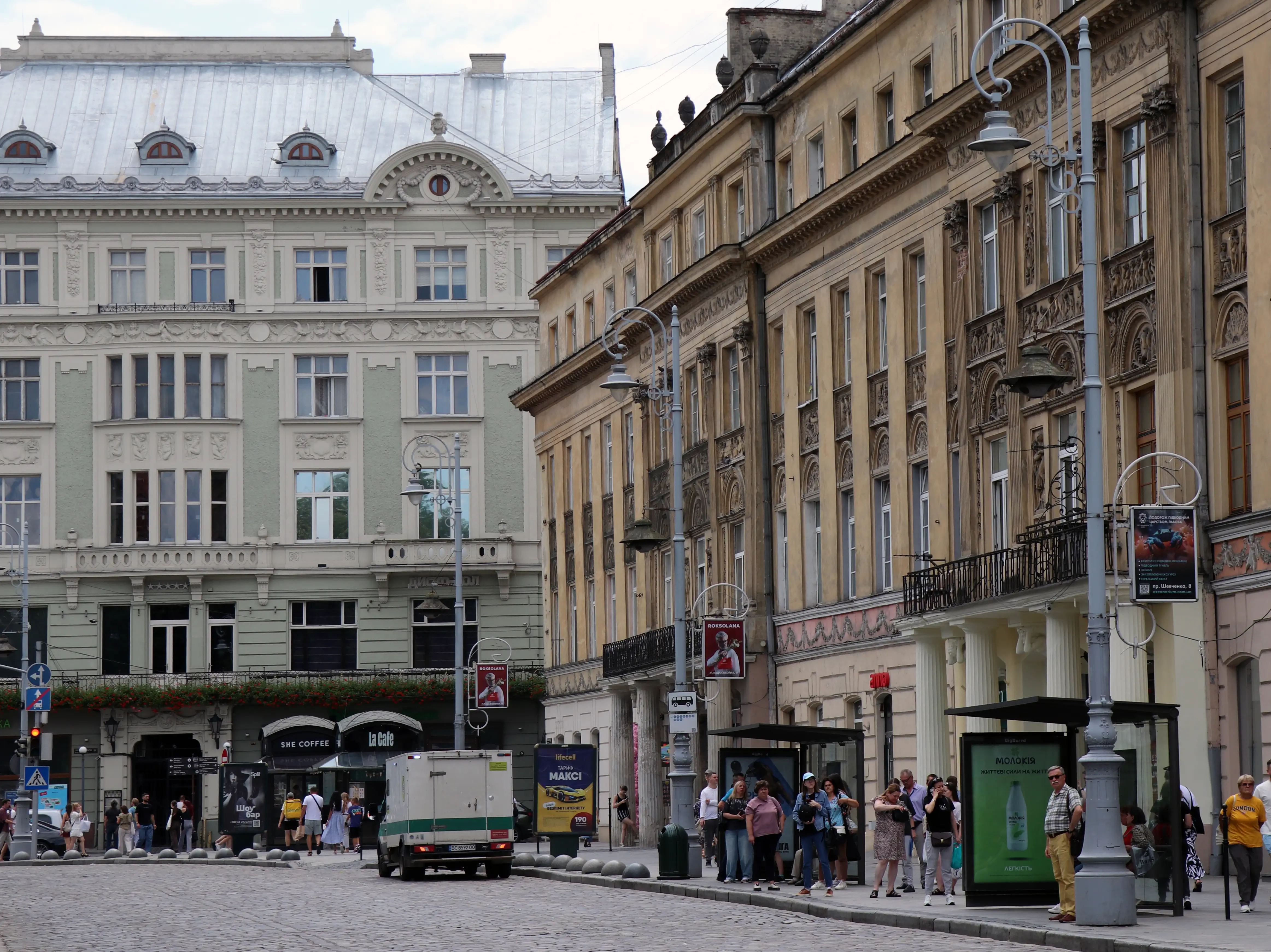
Unfortunately, this mistake impacted how the streetlamps are perceived: they appear disproportionate and get lost within the urban space.
Preservation
As previously mentioned, by 1939 Lviv had at least 139 ultra-high streetlamps. Let's look at what has survived on the city streets today:
As previously mentioned, by 1939 Lviv had at least 139 ultra-high streetlamps. Let's look at what has survived on the city streets today:
Svobody Avenue and Mickiewicz Square preserve those very first ultra-high streetlamps in several different conditions:
1. Streetlamps restored during the 2011 and 2015 reconstructions, which repurposed the historical pedestals ---->
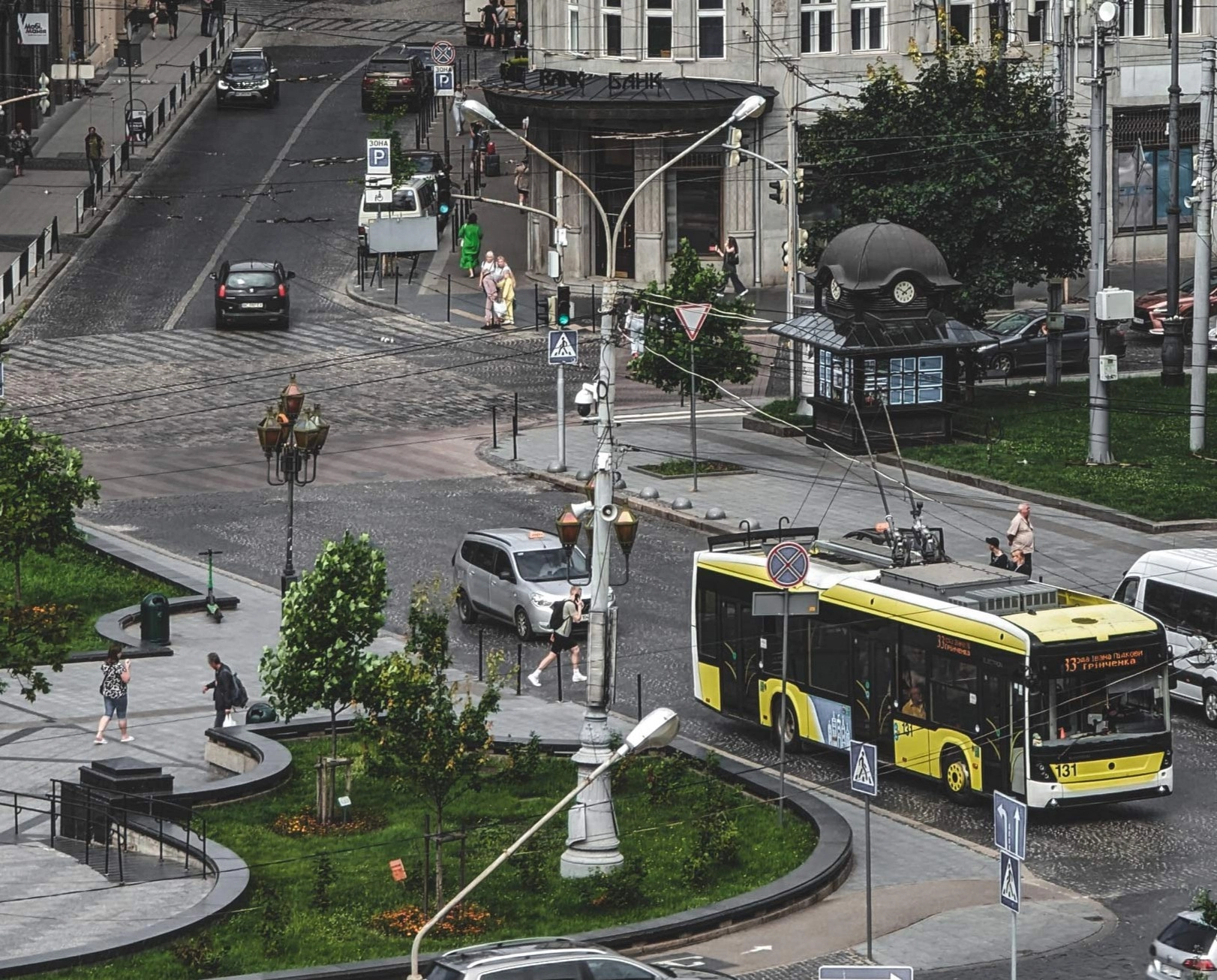
2. Streetlamps rebuilt during the Soviet era, where the original upper sections were replaced with a curved bracket arm --->
2. Streetlamps rebuilt during the Soviet era, where the original upper sections were replaced with a curved bracket arm --->
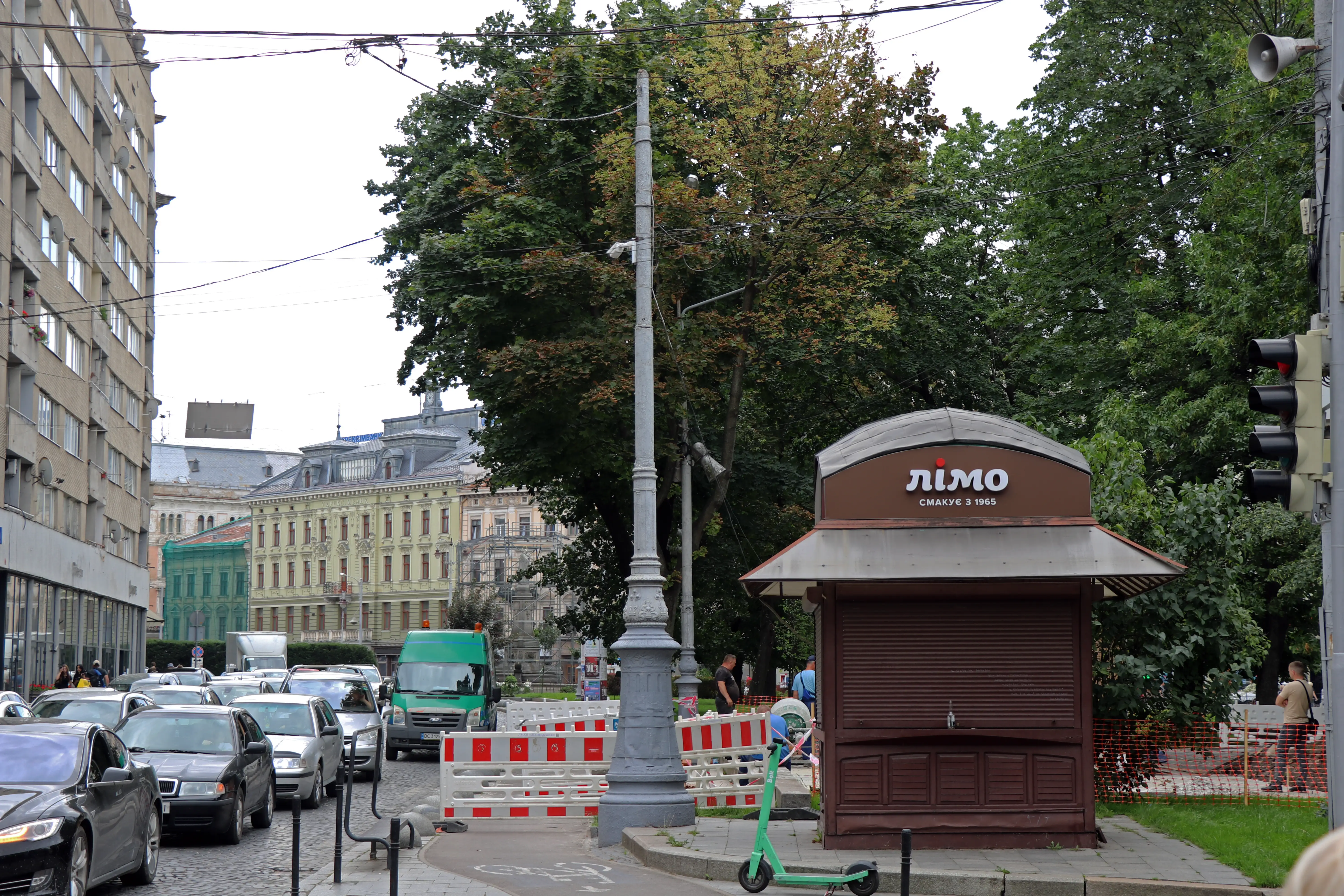
3. Streetlamps with their tops completely dismantled, meaning they no longer serve their primary function of illuminating the avenue --->
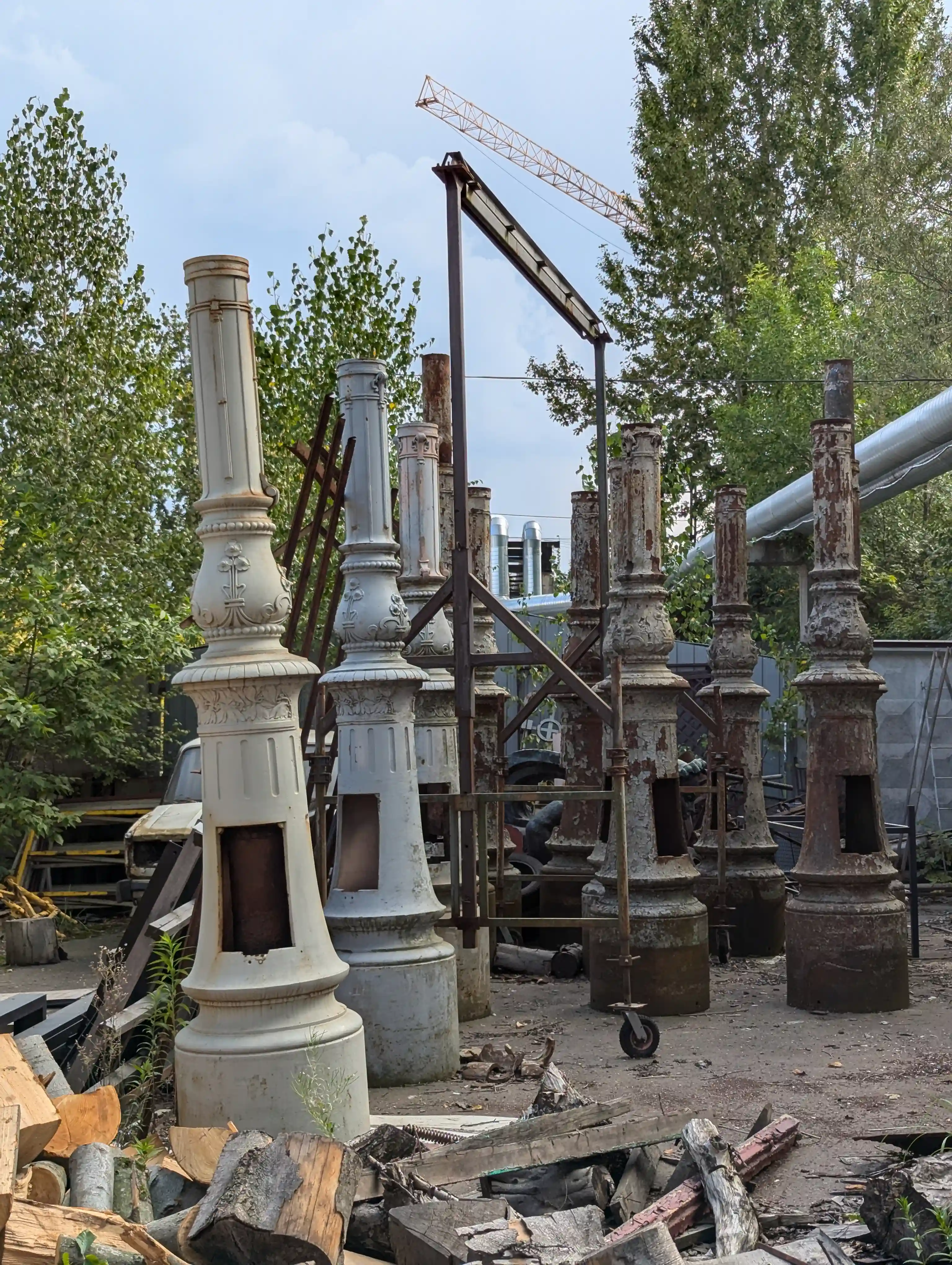
4. The rest of the streetlamps from Svobody Avenue were dismantled and are currently kept in one of the warehouses of LKP "Lvivsvitlo" [Lviv City Lighting Enterprise] --->
4. The rest of the streetlamps from Svobody Avenue were dismantled and are currently kept in one of the warehouses of LKP "Lvivsvitlo" [Lviv City Lighting Enterprise] --->
5. In Soborna Square and Franko Square, small public spaces with benches and a central streetlight were formed during the Soviet era. These streetlamps utilize authentic ultra-high streetlamp pedestals at their bases.
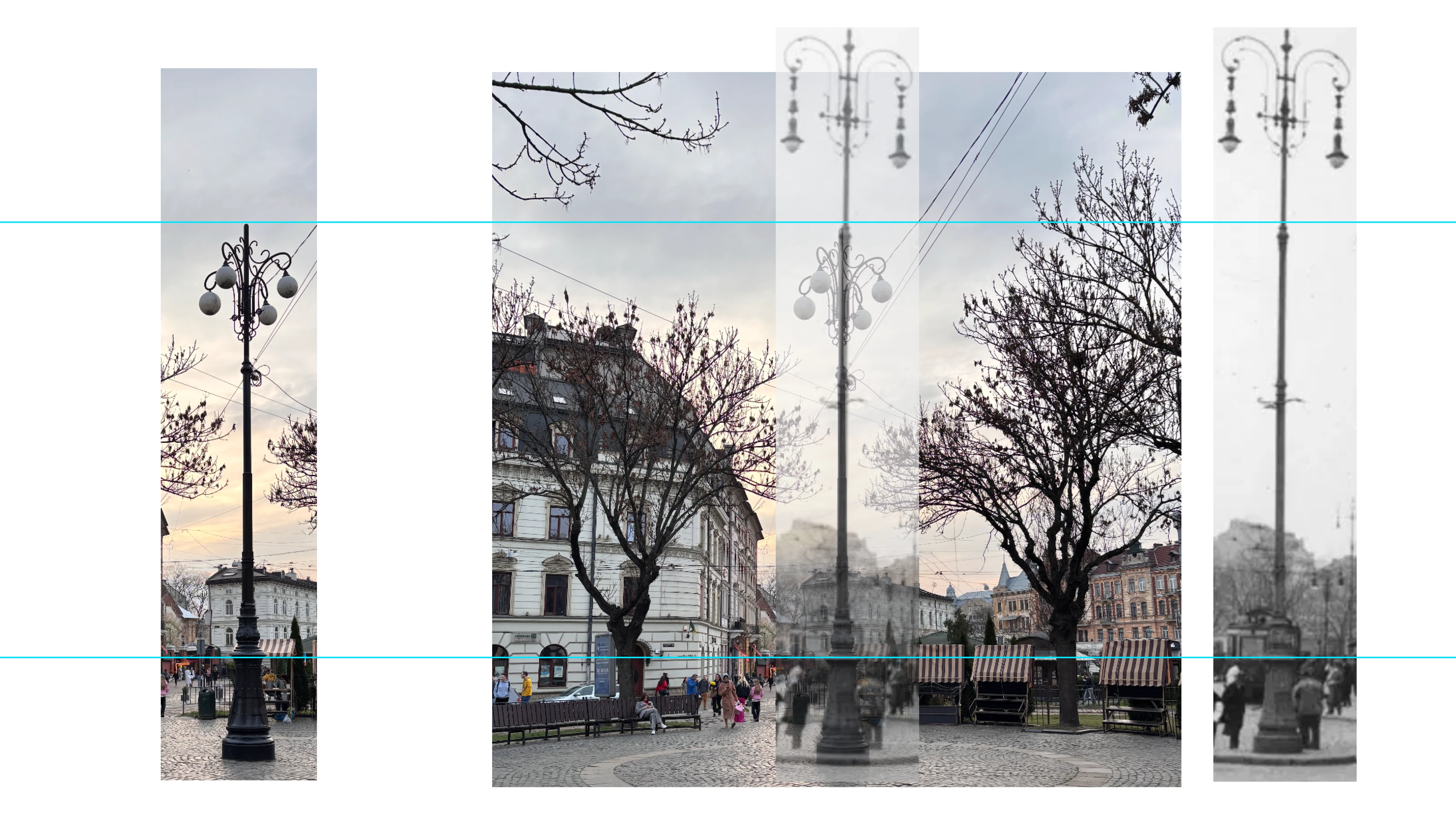
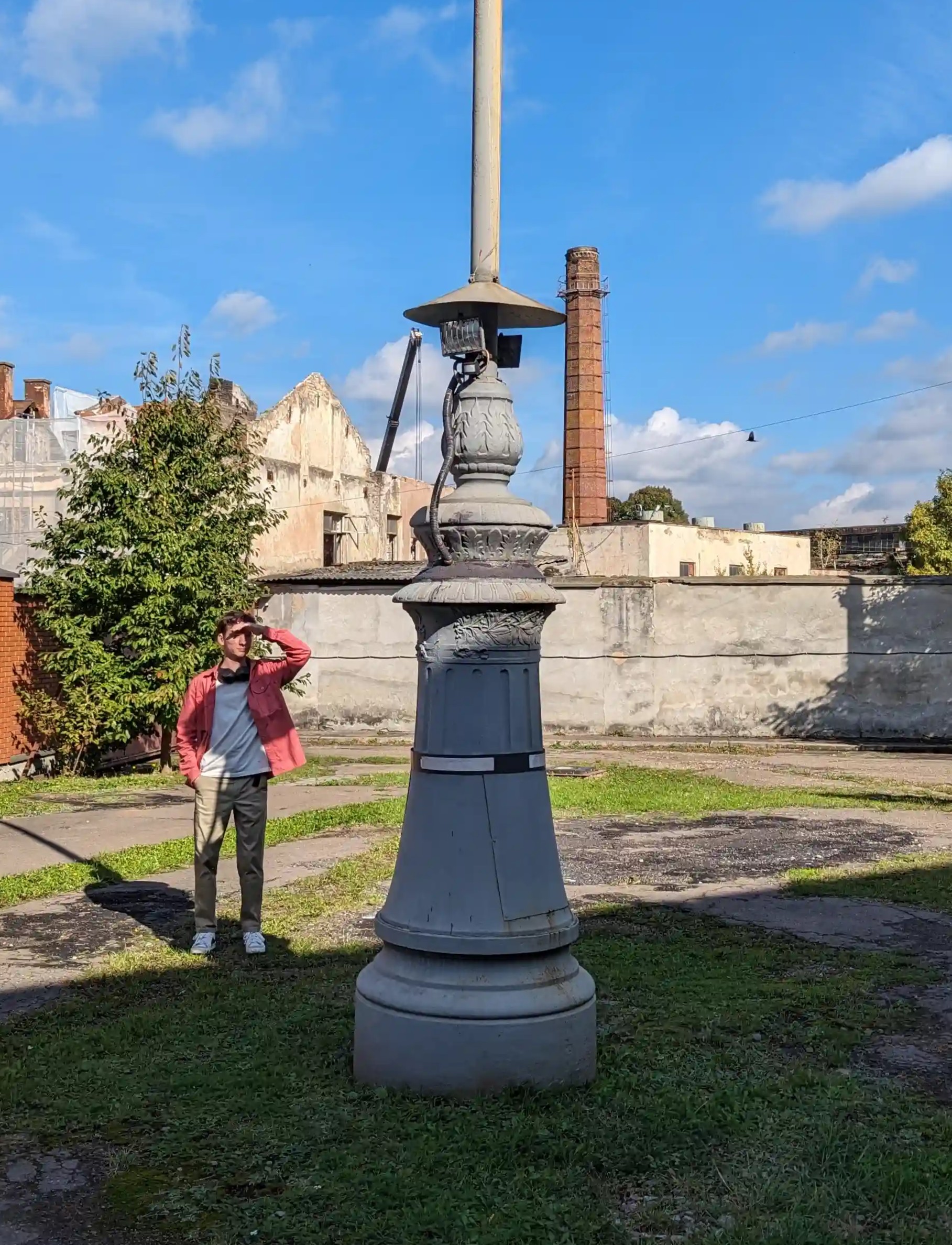
6. A similar situation can be seen on Promyslova Street (25 Promyslova St.). Only a section of an ultra-high streetlamp pedestal has survived here, while the remaining parts were assembled from other, more modern lamps.
7. The same applies to the courtyard of the "Raiduha" Palace of Culture (114 Khmelnytskoho St.), where an authentic lamp part is also preserved at the base --->
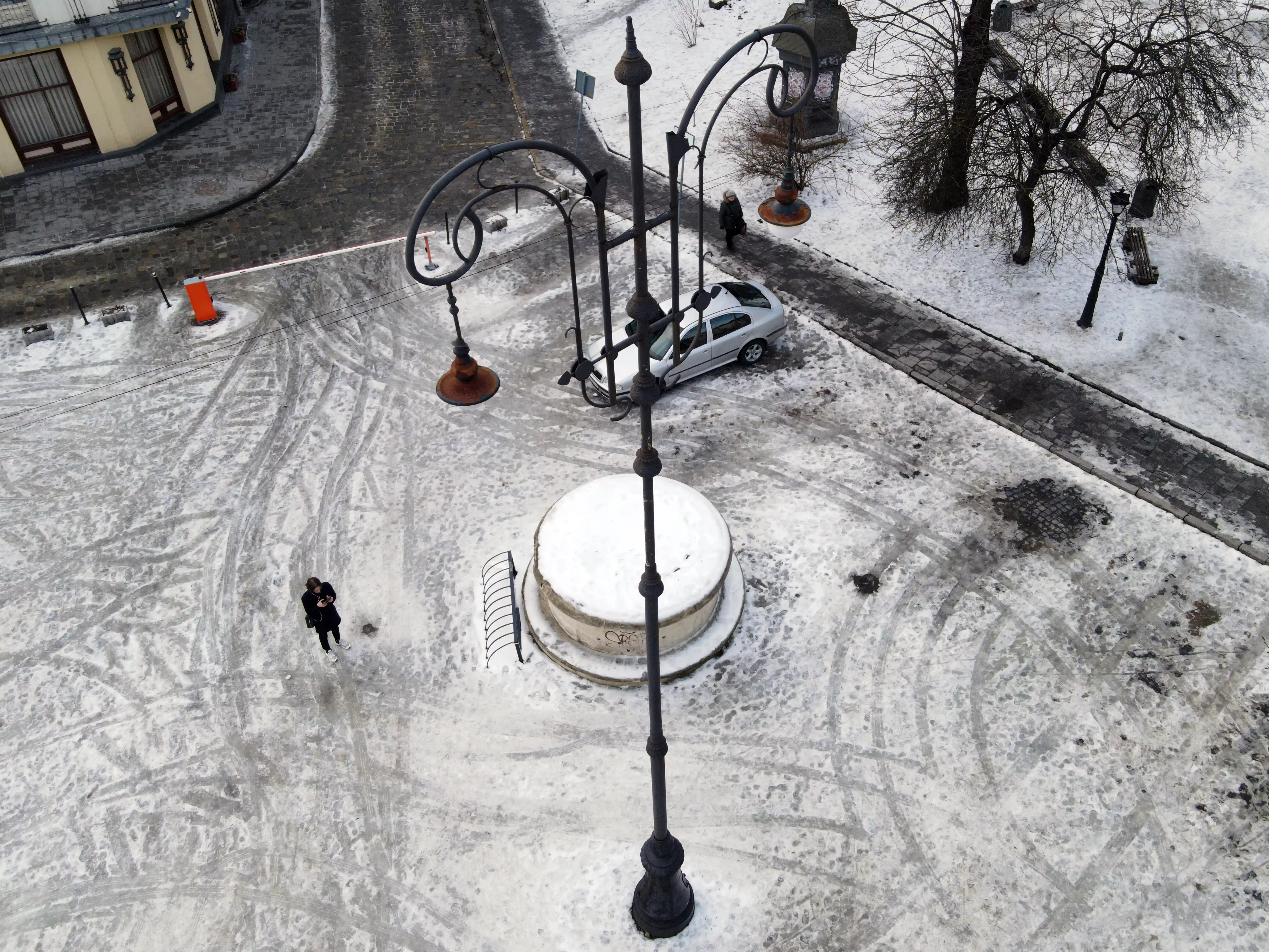
Besides the ultra-high streetlamps of the aforementioned decorative variation, others have also survived. For example, in Staryi Rynok Square, in the middle of a parking lot, stands a lamp that once illuminated the walls of a now-nonexistent synagogue, and is also one of the ultra-high streetlamps from the early 20th century.
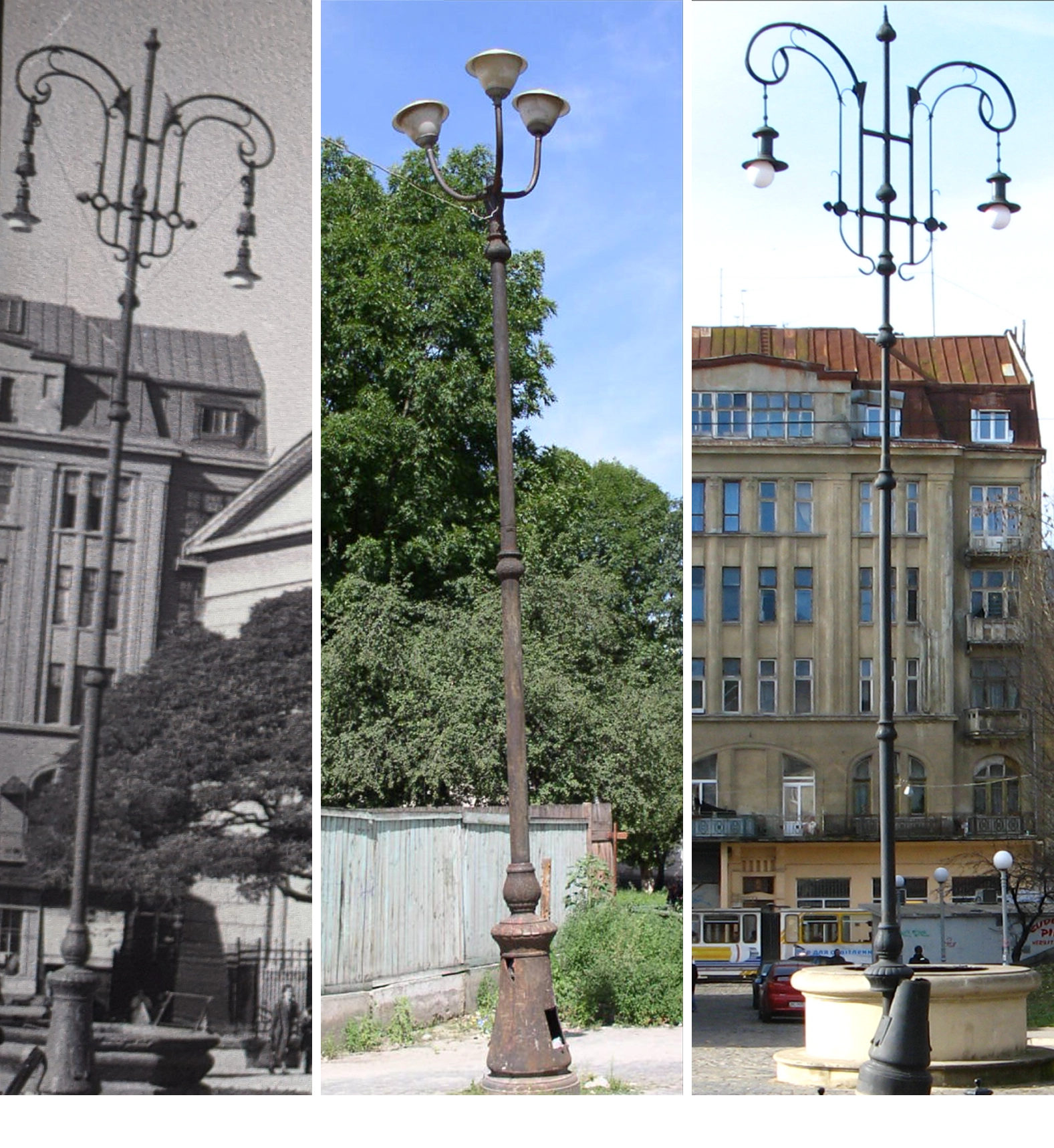
This lamp was restored 20 years ago using the surviving pedestal and decorative overlays, while the other structural parts are modern replicas.
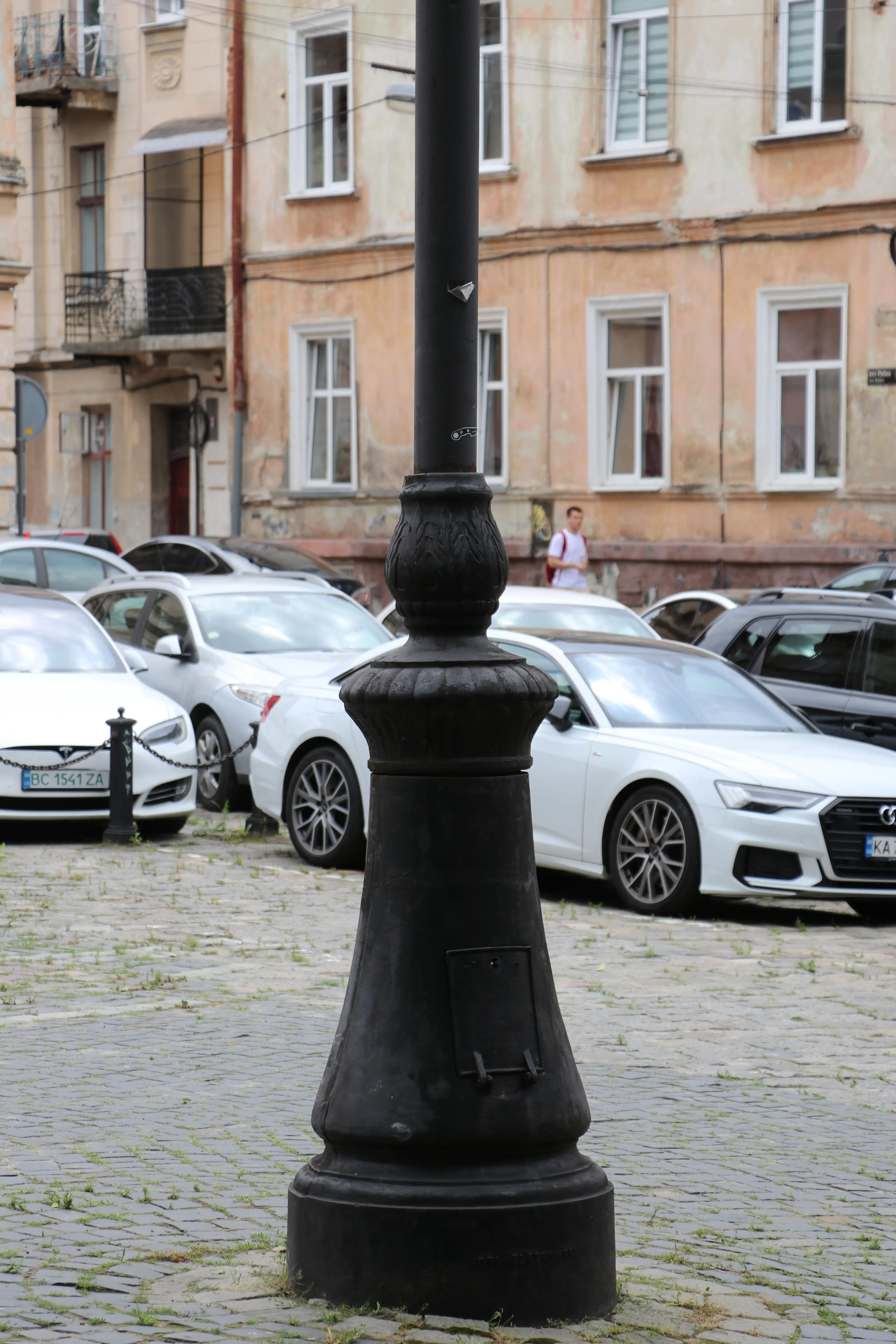
Incidentally, the manufacturer's mark—Huta Blachownia—has been preserved on the lower part of the pedestal.
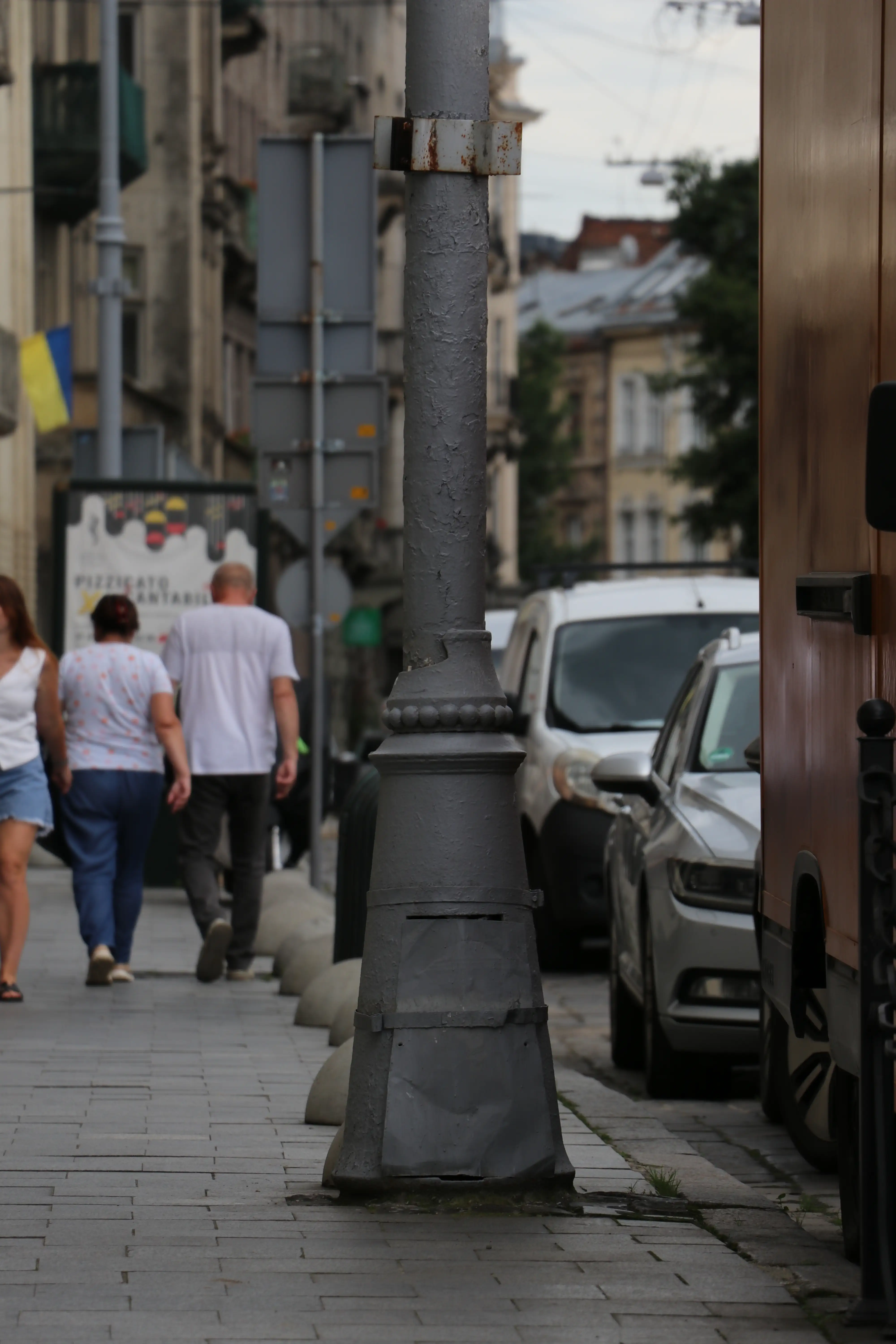
The poles on Shevchenko Avenue (the odd-numbered side) are actually surviving sections of ultra-high streetlamps from the early 20th century.
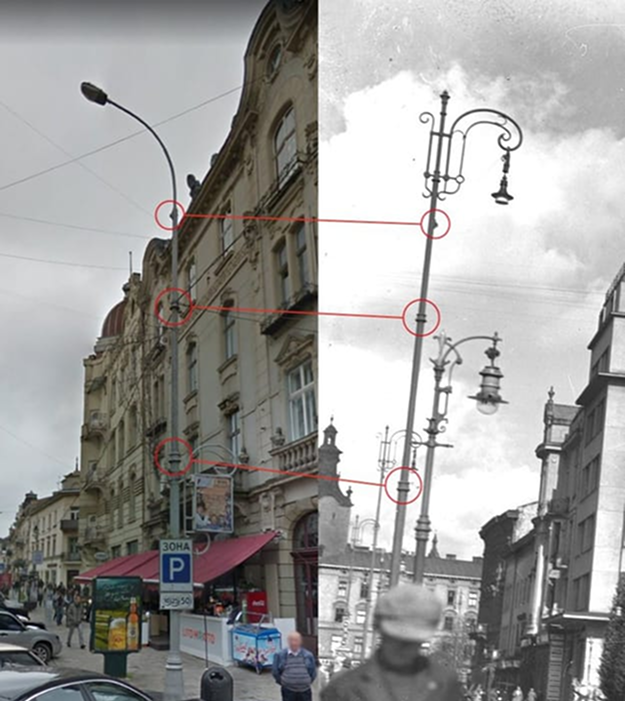
During the Soviet era, they were shortened, and the decorated upper section was replaced with a curved bracket arm. However, if you look closely, you can spot decorative overlays, fragments of the pedestal, and even parts of the lamp-lowering mechanism still preserved on the mast.
During the Soviet era, they were shortened, and the decorated upper section was replaced with a curved bracket arm. However, if you look closely, you can spot decorative overlays, fragments of the pedestal, and even parts of the lamp-lowering mechanism still preserved on the mast.
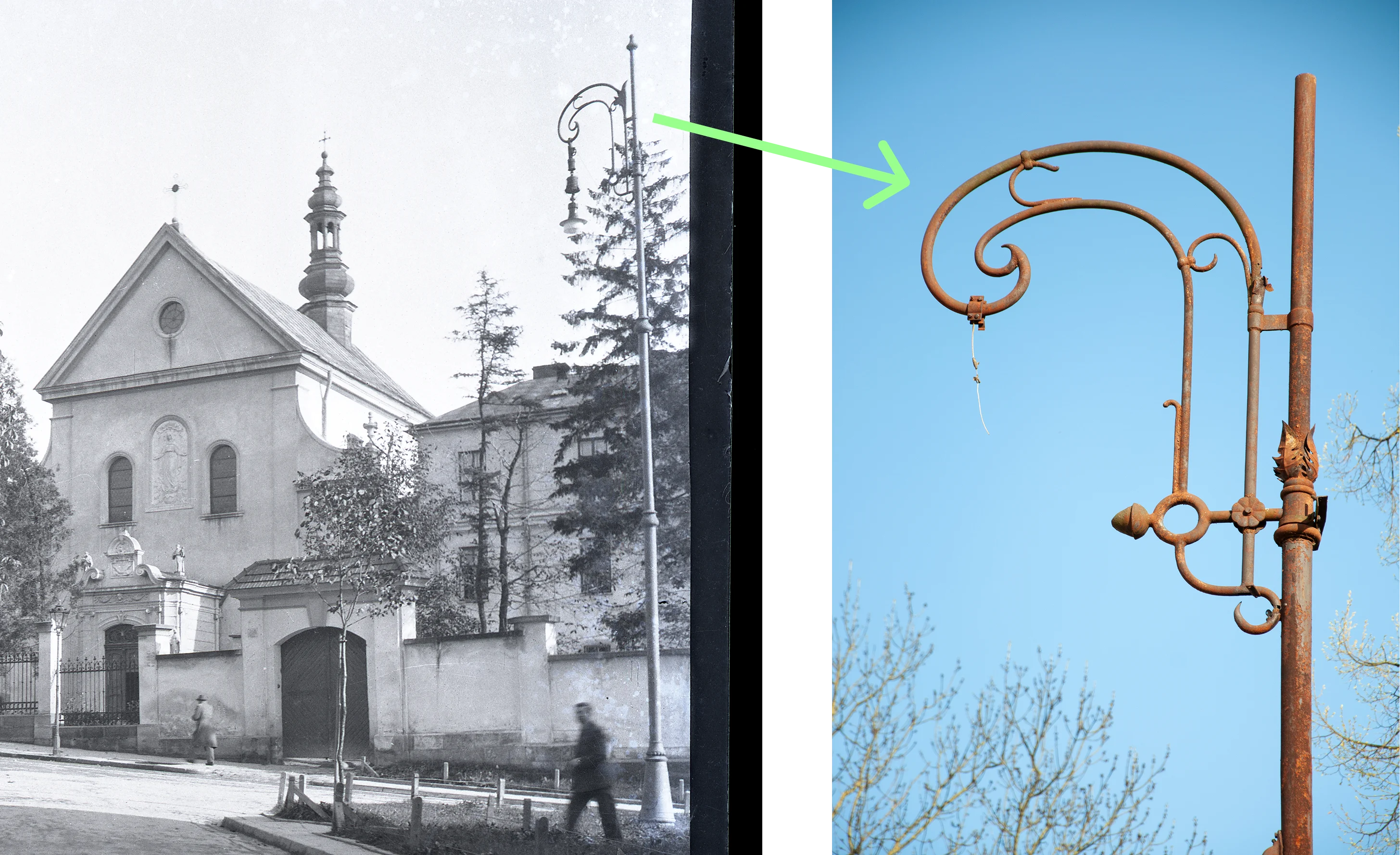
At the intersection of Prosvity and Taras Bobanych streets, an ultra-high streetlamp was installed at the beginning of the 20th century. During the Soviet period, it was dismantled and relocated to the courtyard of the House of the Warrior (Budynok Voyina). This is a unique find, where almost all parts of the structure have been preserved.
At the intersection of Prosvity and Taras Bobanych streets, an ultra-high streetlamp was installed at the beginning of the 20th century. During the Soviet period, it was dismantled and relocated to the courtyard of the House of the Warrior (Budynok Voyina). This is a unique find, where almost all parts of the structure have been preserved.
Джерело: сімейний архів Наталії Отко // Міський медіаархів Центру міської історії
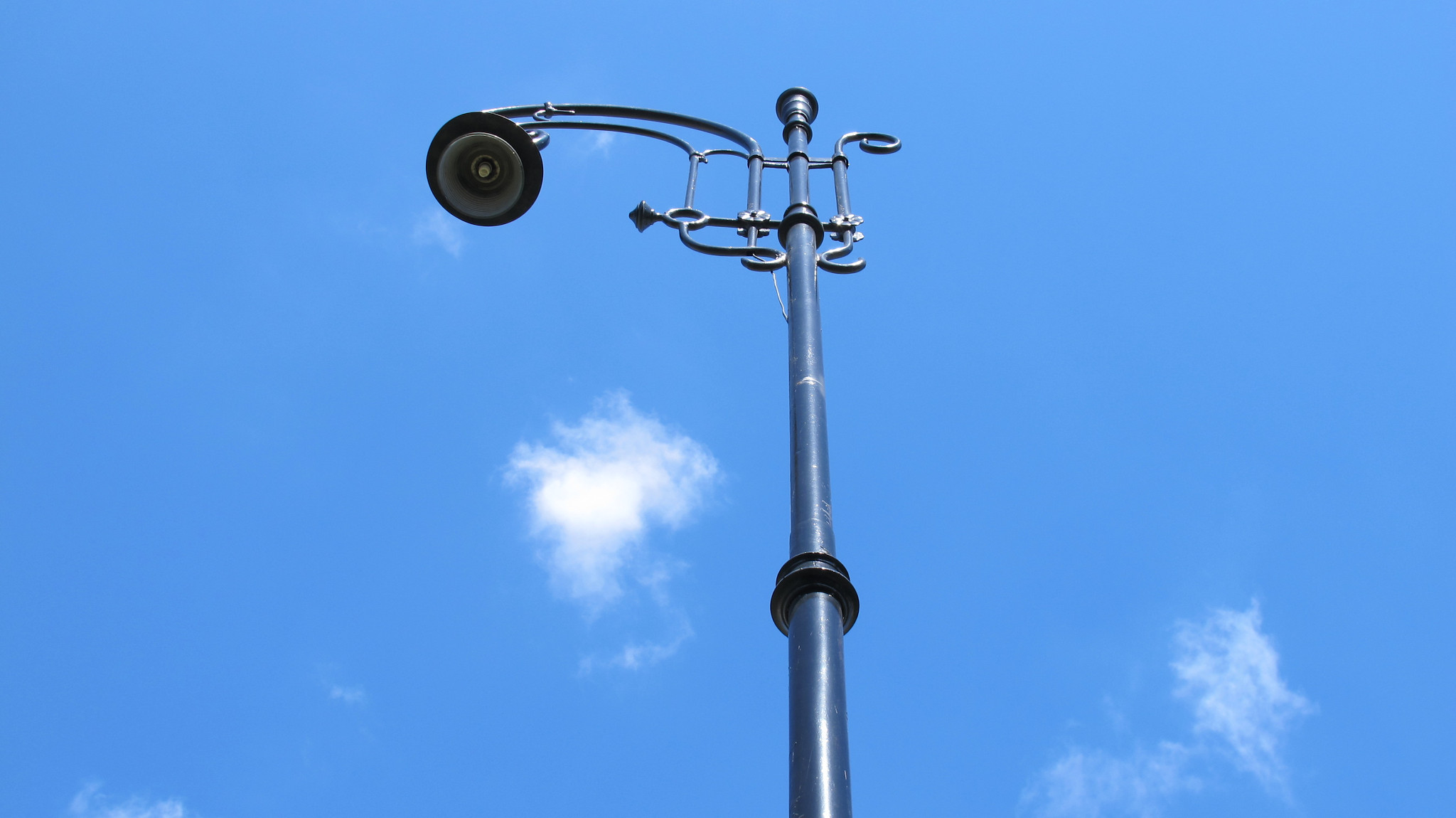
Finally, it is worth mentioning the outdoor exhibition in front of the LKP "Lvivsvitlo" office on Lincoln Street, which houses several authentic components, including the upper sections of the ultra-high streetlamps from Shevchenko Avenue.
Сторінку підготовано на основі авторського дослідження Дмитра Мойсеєнка, масиву історичних фотографій, технічної документації ЛКП "Львівсвітло", ЛКП "Львівелектротранс", матеріалів ДАЛО, та історичних досліджень Музею Історії електрифікації ПРАТ "Львівобленерго". Розділ про історію Відня підготована на основі матеріалів Technisches Museum Wien, статті WienSchauen та статті муніципалітету Відня "Öffentliche Beleuchtung".
Additionally, there are three streetlamps that have been partially dismantled and currently serve no function.
Upon closer inspection, one can spot decorative overlays, fragments of the pedestal, and even the winch mechanisms used to lower the luminaires. The upper section, as is typical, has been dismantled and replaced.
Upon closer inspection, one can spot decorative overlays, fragments of the pedestal, and even the winch mechanisms used to lower the luminaires. The upper section, as is typical, has been dismantled and replaced.
Incidentally, the manufacturer's mark — Huta Blachownia — has been preserved on the lower part of the pedestal.
Джерело: сімейний архів Наталії Отко // Міський медіаархів Центру міської історії
Сторінку підготовано на основі авторського дослідження Дмитра Мойсеєнка та масиву історичних фотографій, технічної документації ЛКП "Львівсвітло", ЛКП "Львівелектротранс", матеріалів ДАЛО, та історичних досліджень Музею Історії електрифікації ПРАТ "Львівобленерго". Розділ про історію Відня підготована на основі матеріалів Technisches Museum Wien, статті WienSchauen та статті муніципалітету Відня "Öffentliche Beleuchtung".

